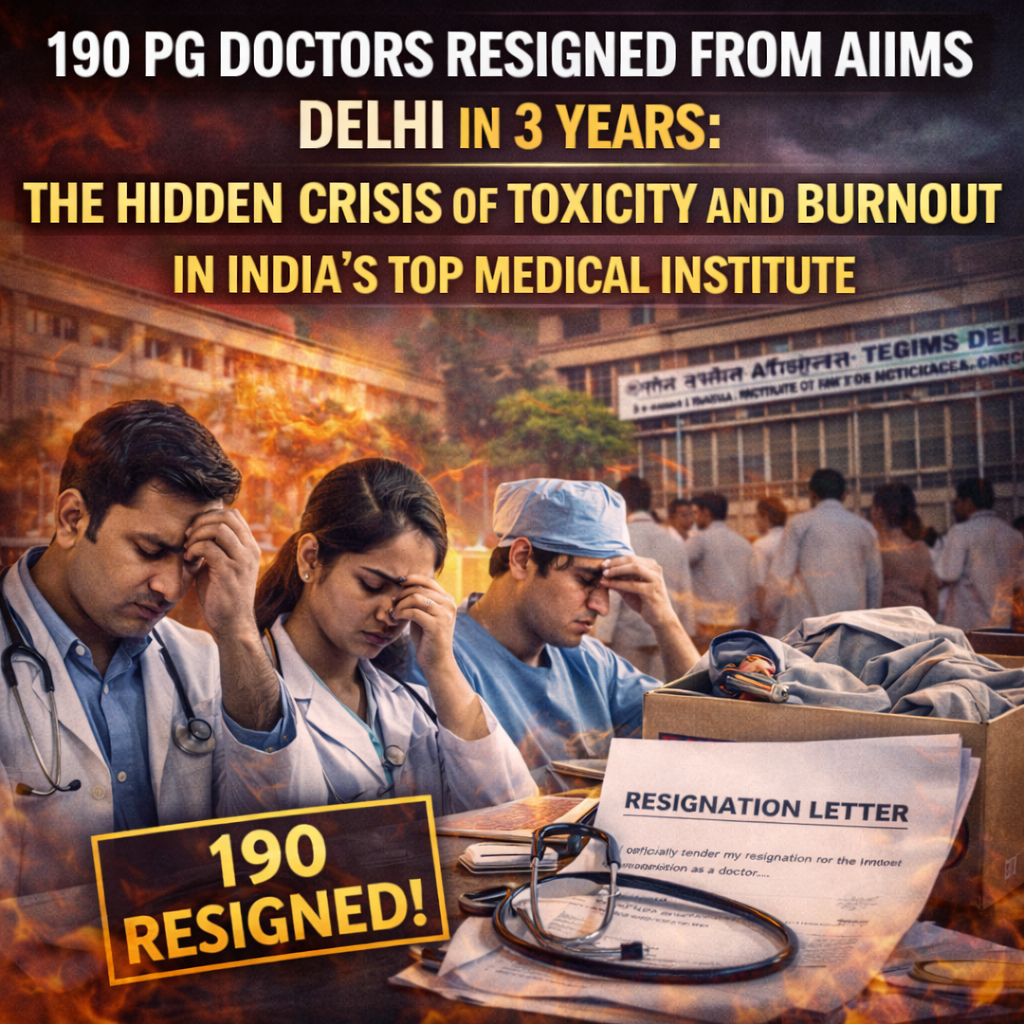
The official reason listed in the RTI document? “Personal” issues or “branch change” but the viral discussion around this data has sparked a much bigger conversation about workplace toxicity, burnout, and mental healthin India’s premier medical training institutions.
As someone who follows healthcare reforms closely, this story isn’t just about numbers it’s about the human cost behind one of the world’s most demanding professions. Let’s break down what the RTI actually reveals and why this matters for every doctor, medical student and patient in India.
What the RTI Document Actually Shows
Dated October 8, 2025 RTI response from AIIMS Delhi’s Academic Section was straightforward. An applicant had asked detailed questions about:
- How many PG students sought psychiatric counseling in the past three years
- Resignation numbers and reasons across departments
- Data for both standard PG (MD/MS) and super-specialty (DM/MCh) courses
AIIMS replied that some queries fell outside the Academic Section’s scope and had been forwarded. But on the resignation front, the numbers were crystal clear:
- MD/MS courses: 190 resignations
- DM/MCh courses: 35 resignations
The stated reasons in every case? “Personal” or “Branch change.”
Branch change is common in Indian PG training. Many students secure a seat in a less preferred specialty in one round of NEET PG counseling and later move to their dream branch when a better seat opens up. “Personal reasons” is a broad category that can cover family issues, health problems, or even financial pressures.
Yet the sheer volume nearly 64 resignations per year from AIIMS Delhi alone has raised eyebrows. For an institute that admits only the country’s brightest medical minds after an intensely competitive exam, losing this many trainees signals something deeper.
The Mental Health Paradox at AIIMS
AIIMS Delhi is globally respected for its research, patient care, and public health advocacy. The institute regularly runs mental health awareness campaigns and has a dedicated Student Wellness Centre. The irony is hard to ignore.
Critics point out that while AIIMS preaches the importance of mental health to the world, its own training environment may be pushing residents to their limits. Long duty hours (sometimes 36 hour shifts), intense academic pressure, hierarchical work culture, and limited work life balance are frequently cited in doctor forums and social media discussions.
This isn’t unique to AIIMS Delhi. Across India:
- Postgraduate medical training is known for its grueling schedule.
- Many residents report sleep deprivation, skipped meals, and constant performance pressure.
- Studies and doctor surveys consistently show higher rates of anxiety, depression, and burnout among medical residents compared to the general population.
The RTI didn’t provide detailed counseling uptake numbers, but the resignation figures have become a rallying point for #MedTwitter and doctor advocacy groups calling for systemic change.
Why This Exodus Matters for India’s Healthcare
India already faces a doctor shortage in many regions. Every resigned PG seat represents:
- Lost training investment by the government and the institute
- Delayed specialist availability for patients
- A talented young doctor potentially leaving clinical practice or moving abroad
Worse, silent message it sends to current and future medical students can be discouraging. NEET PG is one of the toughest exams in the world. Students sacrifice years of their lives to crack it, often moving away from family. When even top tier institutes see high attrition, it raises questions about whether the system is sustainable.
Broader data paints a concerning picture. Government figures from Parliament (shared in 2025) revealed that 429 doctorshad resigned across 20 AIIMS institutions between 2022 and 2024. While some of those were faculty, the pattern suggests residency training challenges are widespread.
Is It Really Just “Personal Reasons”?
Let’s be balanced here.
Not every resignation is due to toxicity. Life happens marriages, family responsibilities, health issues, or better opportunities elsewhere are valid reasons. Branch change is also a legitimate career move in a system where counseling rounds allow seat upgrades.
However, when the same reasons appear repeatedly at scale, it’s worth asking whether the working conditions themselves are contributing. Many doctors anonymously share stories of:
- Unrealistic patient loads
- Lack of adequate rest facilities
- Fear of speaking up due to hierarchy
- Stigma around seeking mental health support
The National Medical Commission (NMC) has introduced guidelines on resident duty hours and wellness in recent years, but implementation varies across institutes.
What Needs to Change? Practical Solutions
This RTI shouldn’t be used to shame AIIMS Delhi it should be used as a catalyst for improvement. Here are realistic steps that could help:
- Strict Enforcement of Duty Hours
The NMC’s guidelines on maximum working hours and mandatory off-days need stronger monitoring. - Expand Mental Health Support
Make counseling truly confidential, increase staffing at wellness centers, and run regular peer-support programs. - Improve Work Environment
Better hostel facilities, nutritious 24/7 food options, and structured mentorship programs can reduce daily stress. - Regular Feedback Mechanisms
Anonymous surveys and exit interviews for residents who leave could provide honest insights without fear of backlash. - Policy-Level Reforms
The government and medical bodies could consider staggered shifts, technology to reduce documentation burden, and more PG seats to ease competition pressure.
AIIMS Delhi has already taken several positive steps in resident welfare. Strengthening and publicizing these efforts could help rebuild trust.
A Message to Aspiring and Current Doctors
If you’re a medical student or resident reading this: your well being matters as much as your patients’. Medicine is a noble profession, but it shouldn’t come at the cost of your physical or mental health.
If you’re struggling, reach out to your institute’s wellness center or trusted seniors. Resources like the IMA’s mental health helplines and various doctor support groups exist for a reason.
To the authorities and senior faculty: the next generation of doctors is watching. Creating an environment where residents feel supported isn’t just kind it’s essential for producing better clinicians and researchers.
The Road Ahead
The 190 resignations at AIIMS Delhi aren’t just statistics on an RTI sheet. They represent 190 bright young doctors who entered the system full of hope and left for reasons we need to understand better.
As India aims to strengthen its healthcare infrastructure and produce more specialists, addressing the human side of medical training is no longer optional it’s urgent.
What do you think? Is the high resignation rate at AIIMS Delhi a symptom of deeper issues in PG medical training? Share your thoughts in the comments (respectfully, of course). If you’re a doctor or medical student, we’d love to hear your perspective while maintaining confidentiality.
This article is based on publicly available RTI information and widespread discussions in the medical community. It aims to spark constructive dialogue on improving postgraduate medical education in India.