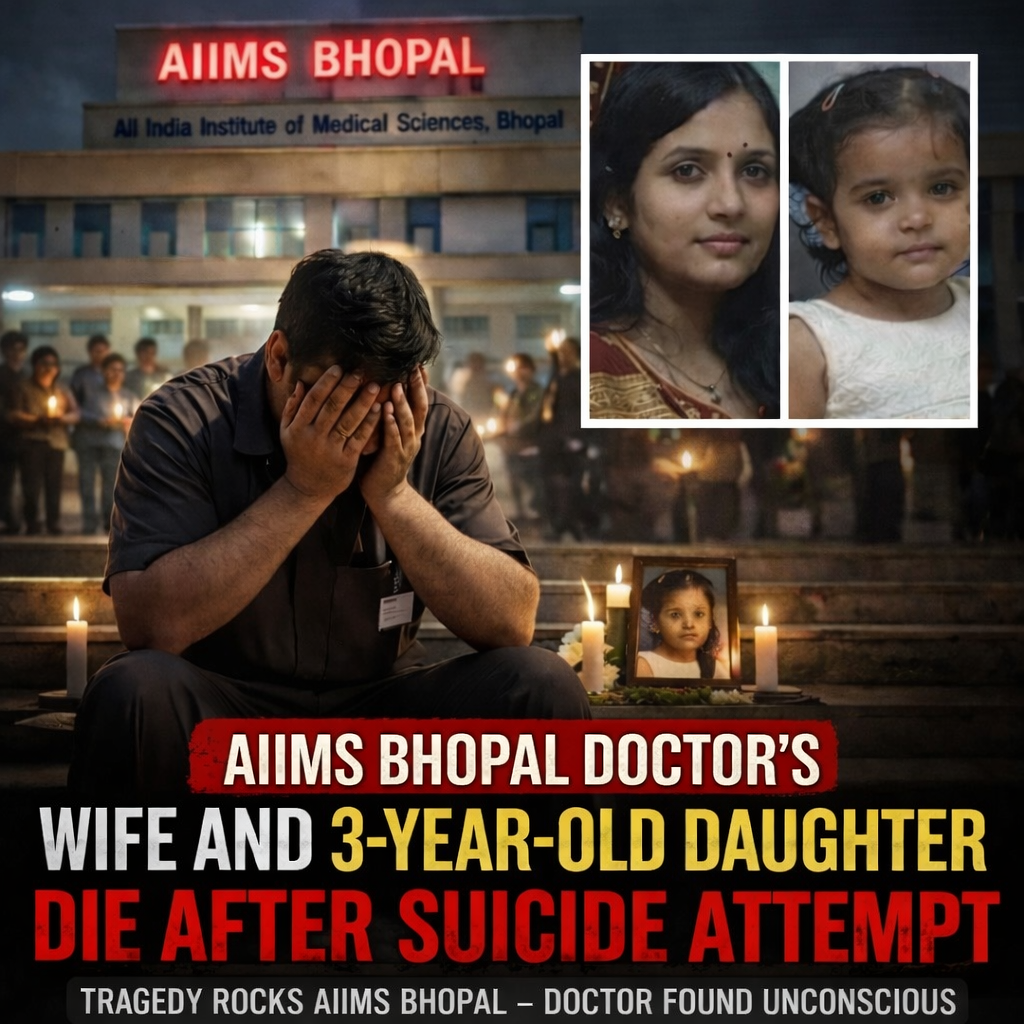
Despite emergency medical intervention, Shankara Kumari and Mounika tragically passed away that day, while Dr. Gopi is admitted in hospital in critical condition and died next day in the morning on 30,march.
When police entered, they found the family unconscious. Tragically, Shankara Kumari (aged around 30-31) and young Mounika did not survive, while Dr. Gopi was rushed to a nearby hospital in critical condition and next morning he died. Family hailed from Satuluru village in the Nadendla mandal area, making this return to their native region even more poignant. Police have registered a case and are conducting a thorough probe to understand the circumstances. While no official motive has been confirmed, preliminary indications point to possible severe emotional strain within the family. Authorities are examining all aspects, including personal and professional factors with sensitivity and care.
The Rising Mental Health Crisis Among Doctors in India
India’s healthcare workforce is under unprecedented strain, and the numbers paint a concerning picture. Studies and government data reveal a troubling trend:
- Between 2010 and 2019, India recorded 358 suicides among medical students, residents, and practicing physicians. More recent analyses (2020–2022) show a sharp rise, with over 118 reported cases in just three years indicating a fourfold increase in some periods.
- The National Medical Commission (NMC) has acknowledged this through RTI responses, noting dozens of suicides among MBBS and postgraduate students in recent years.
- Broader suicide statistics from the National Crime Records Bureau (NCRB) report 171,418 suicides in 2023 alone, with mental health issues affecting nearly 15% of India’s adult population. Yet, there’s a massive 70–92% treatment gap due to stigma, lack of awareness and insufficient professionals (India has just 0.75 psychiatrists per 100,000 people, far below the WHO’s recommended 3).
Why are doctors particularly vulnerable? The reasons are multifaceted:
- Intense Professional Pressure: Long shifts, patient overload, administrative burdens, and the emotional toll of life and death decisions leave little room for self care.
- Work Life Imbalance: Many physicians like Dr. Gopi and his wife, juggle careers while managing family responsibilities especially when a child requires specialized care.
- Stigma Within the Profession: Seeking help is often viewed as a weakness in a field that demands strength and resilience. Toxic work cultures, harassment or unrealistic expectations can exacerbate isolation.
- Financial and Personal Strain: Caring for a child with health challenges adds layers of stress including medical costs, emotional fatigue and uncertainty about the future.
Recent high profile cases at AIIMS Bhopal itself (including earlier incidents involving young doctors) highlight how these issues persist even in premier institutions. The medical community is waking up, with bodies like the NMC pushing for weekly offs and better reporting, but implementation remains slow.
Why This Matters: Beyond One Family’s Story
This incident isn’t just about one doctor or one family it’s a symptom of a larger systemic failure. Healthcare workers are the backbone of our society, yet they often suffer in silence. When a child’s health is involved, the burden multiplies. Parents in these situations may feel helpless, guilty or overwhelmed, especially if support systems (counseling, respite care, or financial aid) are inadequate.We must normalize conversations around mental health. Every doctor, nurse or caregiver deserves the same compassion they extend to patients. Ignoring this crisis not only costs lives but weakens our entire healthcare system.
A Message of Hope and Solidarity
My heart goes out to the family, friends, colleagues and the entire medical community mourning this loss. Tragedies like this in Narasaraopet remind us that life is fragile and that we must do better collectively and individually to support one another.