This isn’t just another legal story it’s a stark reminder of the fine line between personal expression and legal boundaries in the digital age, especially for doctors who are often seen as trusted voices in society.
Background of the Case
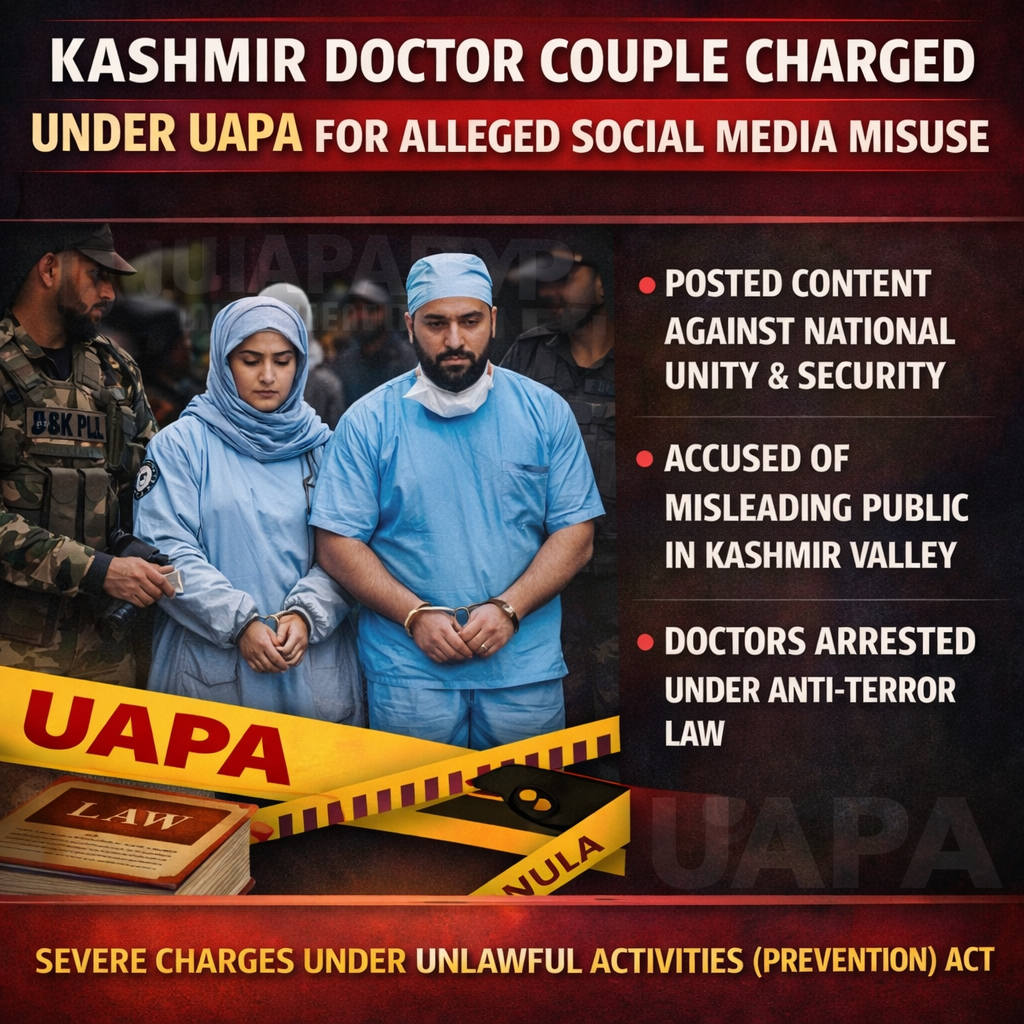
According to reports from multiple credible sources, the Jammu & Kashmir Police’s Counter Intelligence Kashmir (CIK) wing filed a chargesheet on April 1, 2026 before the Special Judge designated under the NIA Act in Srinagar.
The accused are:
- Dr. Umer Farooq Bhata south Kashmir based doctor (resident of Bugam, Kulgam) working in a government hospital in Srinagar.
- Shahzada Aktherhis wife.
Couple was reportedly detained in November 2025 following the registration of FIR No. 05/2025 at CIK Police Station Srinagar. This isn’t the first time social media activity has landed professionals in hot water but the involvement of a practicing doctor under anti terror laws makes it particularly noteworthy for the healthcare fraternity.
What Are the Allegations?
Police allege that Shahzada Akther in a “well planned criminal conspiracy” with members of the proscribed terrorist organization Dukhtaran-e-Millat and in active connivance with her husband Dr. Bhat misused social media platforms.
The specific claims include:
- Creation and dissemination of false, fabricated, and distorted narrativesabout the situation in Kashmir.
- Use of social media (including encrypted messaging apps) to spread content that allegedly incites religious disharmony, promotes secessionist sentiments and endangers India’s sovereignty and integrity.
The chargesheet invokes:
- Sections 152 and 62(2) of the Bharatiya Nyaya Sanhita (BNS): Dealing with acts that excite secession subversive activities or feelings of separatism through words, signs or electronic communication.
- Sections 13, 38, and 39 of the Unlawful Activities (Prevention) Act (UAPA): Covering unlawful activities, membership/support to terrorist organizations and providing support to such groups.
Police maintain the content was designed to create disharmony and fuel separatist narratives. Couple has not yet publicly commented on the charges and the matter is now before the court.
Why This Case Matters for Doctors
Doctors in India enjoy immense respect but they are also public figures whose opinions carry weight especially on platforms like X (formerly Twitter), Facebook, Instagram and WhatsApp.
Key takeaways from this case for medical professionals:
- Social media is never truly “private”: Even posts shared in closed groups or via encrypted apps can be traced in investigations involving national security.
- Professional ethics intersect with law: National Medical Commission (NMC) guidelines already emphasize responsible digital conduct. Misinformation that could harm public order may invite both professional and legal repercussions.
- Regional sensitivities: Healthcare workers in conflict prone areas like Jammu & Kashmir operate under additional scrutiny. What seems like sharing “news” or “views” can sometimes be interpreted differently by authorities.
- UAPA’s broad scope: This law allows for stringent measures and cases can take years to resolve. Being named in such a chargesheet can impact reputation, practice and even future employment.
Understanding UAPA in the Context of Social Media
The Unlawful Activities (Prevention) Act was strengthened over the years to tackle terrorism and separatism. Sections 38 and 39 specifically target support material or otherwise to banned outfits. In the digital era, “support” has been interpreted to include online propaganda. Indian courts have upheld that knowingly spreading content at the behest of proscribed groups can attract UAPA charges.
For comparison:
- Similar cases have involved journalists, students, and activists.
- In healthcare, this is relatively rare, making the case a potential precedent.
Doctors must remember: The right to free speech under Article 19(1)(a) of the Indian Constitution is not absolute. Reasonable restrictions apply for sovereignty, public order and incitement to offense.
Broader Implications for the Medical Community
This case raises important questions:
- How can doctors engage in civic discourse without crossing legal lines?
- Is there a need for clearer guidelines from medical bodies on social media in politically sensitive zones?
- What support systems exist for doctors facing such investigations?
As India’s digital landscape evolves with the Digital Personal Data Protection Act and stricter IT rules, healthcare professionals must stay updated. Medical community’s trust is built on integrity both in clinics and online.
Final Thoughts
While the courts will decide the merits of this particular case, it serves as a timely wake up call. Social media offers unprecedented reach but with great power comes great responsibility especially for those in noble professions like medicine.
Disclaimer: This post is for informational and educational purposes only. It is based on publicly available reports and does not constitute legal advice. Always consult a qualified lawyer for personal legal matters.