This ruling not only affirms substantial compensation for his grieving family but also highlights ongoing challenges in protecting our frontline healthcare heroes. If you’re a doctor, medical professional or someone concerned about public health safety, this story matters more than ever.
The Tragic Incident That Shook the Medical Community
On April 20, 2016 Dr. Sunil Kumar Singh, a 40 year old paediatrician posted at the Community Health Centre (CHC) in Jaspur, Uttarakhand was brutally murdered in broad daylight. He was performing his routine duties in the Out Patient Department (OPD), treating a child patient, when assailants entered and shot him at point blank range.
Dr. Singh was a government doctor from Bihar’s Gaya district, serving the people of Uttarakhand with commitment. His wife, Sarita Singh, was left to raise their family alone while fighting for justice and financial security through the courts.
The incident wasn’t an isolated event. It became a symbol of the growing risks faced by doctors across India risks that continue even today despite repeated promises of protection.
The Long Legal Battle: From High Court to Supreme Court
After the murder, Sarita Singh approached the courts seeking justice, compensation, and extraordinary pension benefits under the Uttar Pradesh Civil Services (Extraordinary Pension) Rules, 1981 (applicable in Uttarakhand).
In 2018, the Uttarakhand High Court delivered a strong verdict:
- It directed the state government to pay approximately ₹1.90–1.99 crore in compensation.
- It also ordered the release of extraordinary family pension, recognizing that doctors risk their lives just like other public servants.
The state government challenged this order in the Supreme Court. After years of litigation, the apex court stepped in with a balanced and pragmatic decision.
What the Supreme Court Ruled in 2026
In its recent order (April 2026), the Supreme Court has:
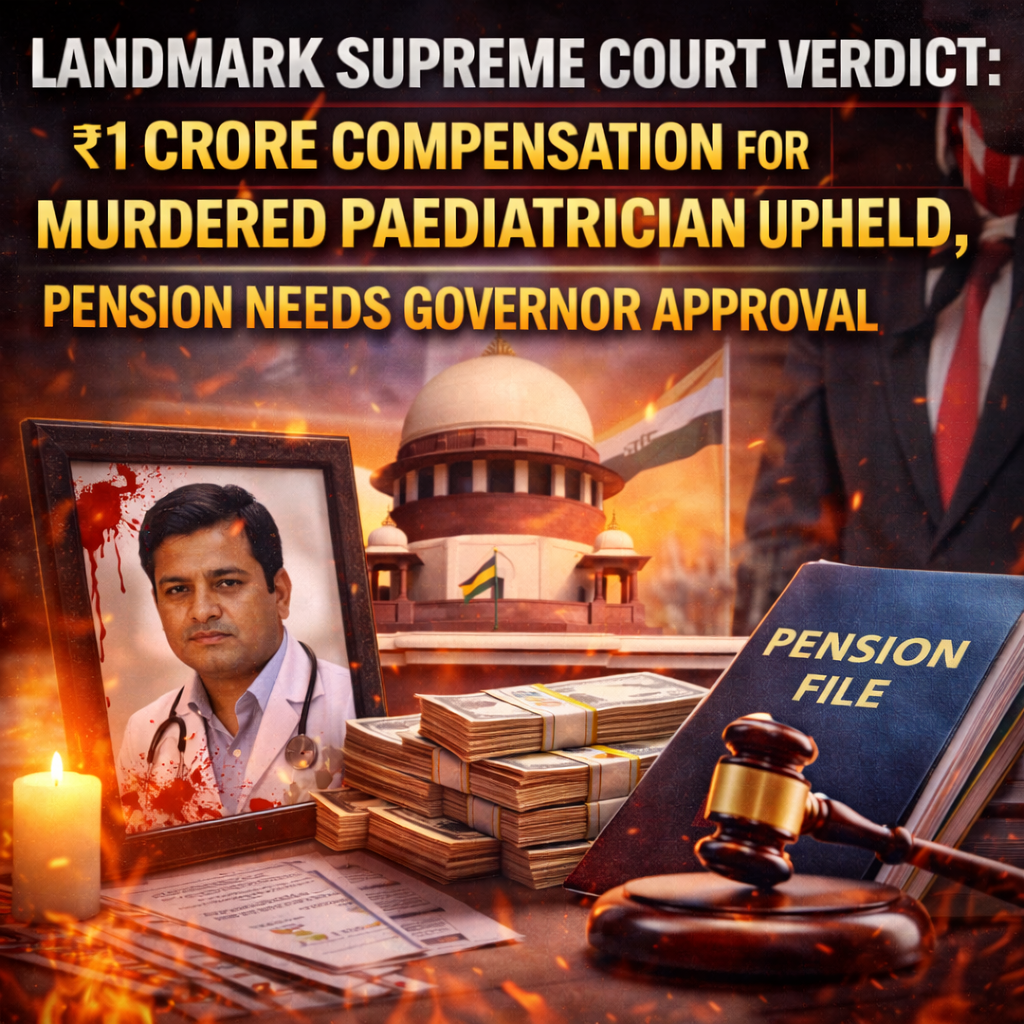
- Upheld ₹1 crore as total compensation for the widow and family (including interest for the delay). This amount stands firm and must be paid by the Uttarakhand government.
- Modified the pension order: While the High Court had directed immediate grant of extraordinary pension, the Supreme Court clarified that such a pension requires the Governor’s explicit approval under the 1981 Rules. Courts cannot bypass statutory procedure.
The bench emphasized the state’s failure to pay even an earlier approved ex-gratia amount of ₹50 lakh, calling out the prolonged litigation that forced the family to suffer for nine long years.
This verdict strikes a middle path delivering meaningful financial relief while respecting legal procedures. It sends a clear message: the state must protect and compensate doctors who die in the line of duty but processes must be followed.
The Bigger Crisis: Why Violence Against Doctors Persists in India
Dr. Singh’s case is heartbreaking but unfortunately not unique. India has one of the highest rates of violence against healthcare workers (VAHCW) globally. Studies show India recorded around 220 reported incidents between 2016 and 2022 roughly 3 incidents per 10,000 healthcare workers, five times the global average.
Common triggers include:
- Patient frustration over long waits or perceived negligence
- Misinformation and mistrust amplified by social media
- Inadequate security in government hospitals
- Political interference and mob mentality
Despite laws like the Uttarakhand Medicare Service Persons and Institutions (Prevention of Violence and Damage to Property) Act, 2013, and similar state legislations, implementation remains weak. A 2025 central law on protection of healthcare workers has been discussed, but experts and even a Supreme Court-appointed task force have noted that state-level enforcement, better infrastructure, and awareness are more effective than blanket central legislation.
What This Verdict Means for Doctors and the Healthcare System
- Financial Justice for Families: The ₹1 crore compensation provides much-needed security for Dr. Singh’s widow and children. It sets a precedent that the government cannot ignore its duty when a doctor dies on duty.
- Procedural Clarity on Pensions: By requiring Governor’s sanction, the Court has reinforced that extraordinary benefits must follow due process — preventing arbitrary orders but also putting pressure on state governments to act swiftly.
- Accountability for States: The ruling highlights governmental delays and failures. It may encourage other states to proactively review security protocols in hospitals and CHCs.
- Hope for the Medical Fraternity: Young doctors and resident doctors often feel vulnerable. This judgment reaffirms that the judiciary stands with them when the system fails.
Steps We Must Take to Prevent Future Tragedies
The Supreme Court verdict is a step forward, but real change needs collective action:
- Stronger Hospital Security: Mandatory CCTV, metal detectors and trained security personnel in every government health facility.
- Fast Track FIRs and Prosecution: Violence against doctors should be treated as a non-bailable, cognizable offence with speedy trials (many states already have provisions they must be enforced).
- Public Awareness Campaigns: Educating citizens that doctors are human and hospitals are not battlegrounds.
- Better Doctor Patient Communication Training: Reducing misunderstandings that often escalate.
- Mental Health Support for Doctors: Burnout and stress make healthcare workers more vulnerable.
Medical associations like the Indian Medical Association (IMA) have been vocal. The National Medical Commission (NMC) and state governments must collaborate on uniform guidelines.
A Message of Hope and Responsibility
Dr. Sunil Kumar Singh gave his life serving patients. Nine years later, his family has received meaningful justice but at what cost?
This Supreme Court ruling is not just about one doctor or one family. It is a reminder that healthcare is a noble profession that deserves respect and protection. As citizens, we must demand safer working conditions for our doctors. As a society, we owe it to the thousands of medical professionals who work tirelessly, often in under resourced settings.
If you’re a doctor reading this: Your voice matters. Document incidents, support your colleagues, and push for stronger safety measures. If you’re a patient or family member: Remember that behind every white coat is a human being trying their best under pressure.
Let Dr. Singh’s sacrifice not be in vain. Let this verdict spark real change safer hospitals, stronger laws, and a society that values its healers.
What do you think? Should India have a stricter central law for protecting doctors? Share your views in the comments below.
Stay informed on healthcare policy, doctor safety and medical news. Subscribe to our newsletter for weekly updates. Sources for this article include official court reports and verified news outlets (Indian Express, Times of India, Medical Dialogues). All analysis and opinions are original.