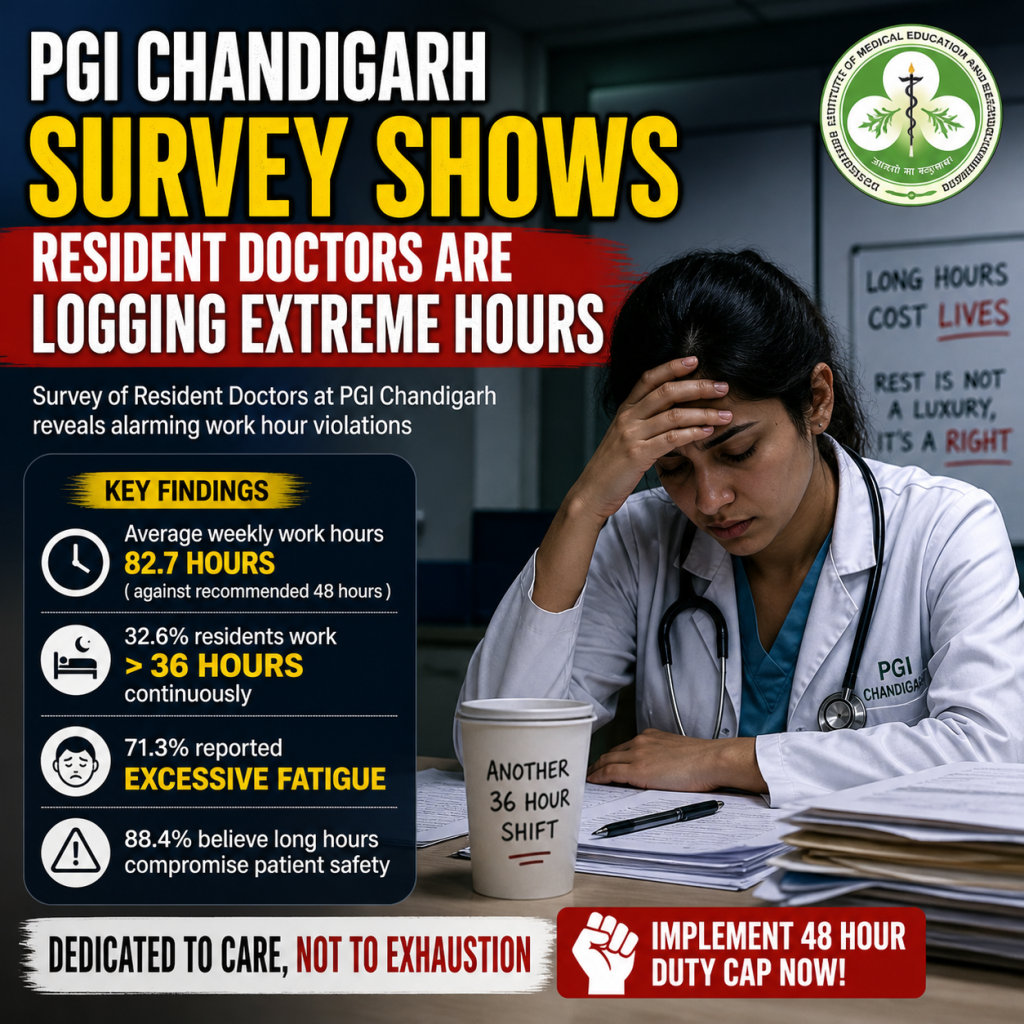
If you’ve ever wondered why your doctor sometimes looks exhausted during a late night hospital visit, a new survey from one of India’s top medical institutes offers some clear answers. A recent study at the Postgraduate Institute of Medical Education and Research (PGI) Chandigarh has revealed that the majority of resident doctors are working far beyond what most people would consider a normal week. Specifically 80 percent of them put in more than 60 hours every week and 46 percent regularly cross 80 hours. Survey which looked closely at duty patterns and their effects has flagged widespread burnout as a growing concern. This isn’t just about long shifts. It’s about what happens when young doctors, backbone of India’s hospital care are stretched this thin for years on end.
What the Numbers Actually Tell Us
Let’s put these figures in perspective. A standard full time job in most fields is around 40 hours a week. Here we’re talking about schedules that often include 24 hour on call duties, back to back emergencies and minimal rest between shifts. PGI survey didn’t just count hours. It connected the dots between these extended work periods and signs of burnout emotional exhaustion, feeling detached from patients and a sense that the effort no longer makes a difference. For context many resident doctors in India complete their training while managing wards, assisting in surgeries, handling outpatient clinics and responding to emergencies at all hours. A single week can easily include multiple 30 hour stretches with only short naps in between.
Why These Hours Keep Adding Up
Resident training in India is designed to be intense. After completing MBBS, doctors spend three to five years (or more) learning their specialty through hands on experience. philosophy has long been “see one, do one, teach one,” but in practice it often translates to “work until the work is done.”
Several factors keep the hours high:
- Staff shortages: Many government hospitals run with fewer specialists than needed, so residents fill the gaps.
- Patient load: High footfall means more cases, more documentation, and more follow ups.
- Academic requirements: Research papers, thesis work and exams add to the plate even after clinical duties end.
- On call culture: Being available 24/7 is still seen as a badge of commitment in many places.
PGI findings mirror what doctors across the country have quietly discussed for years. The difference is that this time the numbers are coming from a respected institute with hard data.
A Day in the Life: What Extreme Hours Actually Feel Like
Consider Dr. Meera (name changed), a second year resident in internal medicine at a busy tertiary hospital. On paper her week should have been manageable. In reality, she worked 87 hours last week.
Monday started with a 6 a.m. ward round that stretched into the afternoon. By evening she was assisting in an emergency procedure that ran past midnight. She caught two hours of sleep on a couch in the duty room before being called again at 3 a.m. for a critical patient. By Thursday she had already logged 62 hours. On Saturday she missed her younger brother’s college graduation something she had promised to attend. When she finally reached home on Sunday evening, she couldn’t sleep. Her mind kept replaying patient cases. “I know I’m doing important work,” she told a colleague, “but I don’t feel like myself anymore.” Stories like Meera’s are common. Many residents describe missing family events, postponing marriages, and struggling with anxiety or low mood. Some start questioning whether they chose the right profession.
How Burnout Affects Patient Care
Burnout isn’t just a personal problem for doctors. It directly touches patients.
When someone has been awake for 24 hours straight, even simple tasks double checking a medication dose, noticing subtle changes in a patient’s condition become harder. Studies from around the world have linked long shifts with higher rates of medical errors, though most hospitals try hard to build safety nets. At the same time tired doctors may communicate less clearly with families or feel less empathy during difficult conversations. Patients notice. One mother whose child was in the ICU for a week shared that she felt most reassured when the same resident checked in regularly but that resident was often replaced mid week because of duty rotation and exhaustion. The goal isn’t to blame doctors. It’s to recognize that sustainable schedules protect everyone.
What’s Being Done and What Still Needs Attention
PGI Chandigarh’s survey is part of a larger conversation happening across medical colleges. Some institutes have started experimenting with:
- Better duty hour tracking apps that flag when residents cross safe limits
- Mandatory rest periods after long on call shifts
- Mental health counseling services that residents can access without stigma
- More structured handovers so no single doctor carries the full load
On the policy side, the National Medical Commission has issued guidelines encouraging reasonable working hours but enforcement varies widely between states and hospitals. Private institutions sometimes have stricter internal rules while government centers often face resource constraints.
Practical Steps Residents and Hospitals Can Take Right Now
If you’re a resident doctor reading this, here are small but meaningful changes that have helped others:
- Protect your sleep like it’s a patient: Even 90 minute power naps during long shifts can improve alertness. Use eye masks and earplugs in duty rooms.
- Build a support circle: Regular check ins with two or three trusted colleagues can catch burnout early.
- Use micro breaks: Five minutes of stretching or deep breathing between cases adds up.
- Document everything: Keep a simple log of hours and how you feel. It helps when discussing workload with seniors.
- Know when to speak up: Many programs now have anonymous feedback channels. Use them.
For hospital administrators and department heads, the survey offers a clear prompt:
- Review actual (not scheduled) working hours for the past three months.
- Create protected post call rest time that isn’t eaten into by academic work.
- Involve residents in designing fairer rotation plans.
- Celebrate efficiency and teamwork, not just endurance.
What This Means for Patients and Families
If you’re a patient or a family member, this issue affects you too. You can:
- Ask gently about the team caring for you “Who will be following up tomorrow?”
- Understand that delays or short answers may sometimes stem from fatigue rather than indifference.
- Support broader conversations about healthcare staffing when the topic comes up in the news or local forums.
Doctors treating you are often giving everything they have. Making their schedules sustainable is one of the best ways to ensure high quality care for years to come.
Looking Ahead
PGI Chandigarh survey doesn’t claim to have all the answers but it has put hard numbers on a problem that has been discussed in corridors for a long time. It reminds us that medical training should build strong, healthy doctors not just hardworking ones.India produces some of the finest physicians in the world. Protecting their well being isn’t a luxury; it’s essential for the health of the entire system.
Change won’t happen overnight. It will take consistent effort from medical colleges, regulators, hospital management and the doctors themselves but every small improvement in scheduling, support systems and culture brings us closer to a future where resident doctors can give their best without losing themselves in the process.
Frequently Asked Questions
What exactly did the PGI Chandigarh survey measure?
It collected self reported and verified duty hour data from resident doctors across departments and correlated it with standard burnout assessment tools. The key findings were the 80% figure for over 60 hours and 46% for over 80 hours weekly.
Are there legal limits on how many hours resident doctors can work in India?
The National Medical Commission has recommended reasonable working hours and rest periods, but there is no single strict nationwide cap like the 80-hour weekly average enforced in some other countries. Implementation varies by institution.
How can I tell if a resident doctor I know is experiencing burnout?
Common signs include persistent tiredness even after rest, emotional numbness toward patients, frequent irritability, trouble concentrating or withdrawing from social activities. Early support makes a big difference.
What can patients do to help?
Be patient and understanding during busy periods. Clear communication and realistic expectations help reduce pressure on the care team. Supporting policies that improve staffing and work conditions also helps in the long run.
Is this issue only at PGI Chandigarh?
No, similar patterns have been reported from other major teaching hospitals across India. PGI’s survey has simply brought fresh local data into the national discussion.
Dedication of India’s resident doctors is remarkable. They show up, learn, and save lives even when the hours stretch long and the personal cost feels heavy, real question the PGI survey leaves us with is this: How can we make sure that same dedication doesn’t come at the price of their health or the safety of the patients they serve?
If you’re a doctor, student, patient or simply someone who cares about healthcare now is a good time to join the conversation.
Share this with someone in the medical field. Ask your local hospital about their duty hour policies. Support initiatives that prioritize both excellence and well being because the best care comes from doctors who are not just skilled, but also rested, supported and able to keep showing up for years to come. That’s something worth working toward together.
Disclaimer
This post is for informational and educational purposes only. It does not constitute medical advice, legal opinion or an official investigation. Readers should consult qualified healthcare professionals for personal health concerns. All details are drawn from media reports and outcomes of any official inquiry may provide further clarity.
Link:According to news report from The Times Of India https://timesofindia.indiatimes.com/city/chandigarh/overworked-resident-doctors-down-with-severe-burnout-pgi-survey/amp_articleshow/130623395.cms