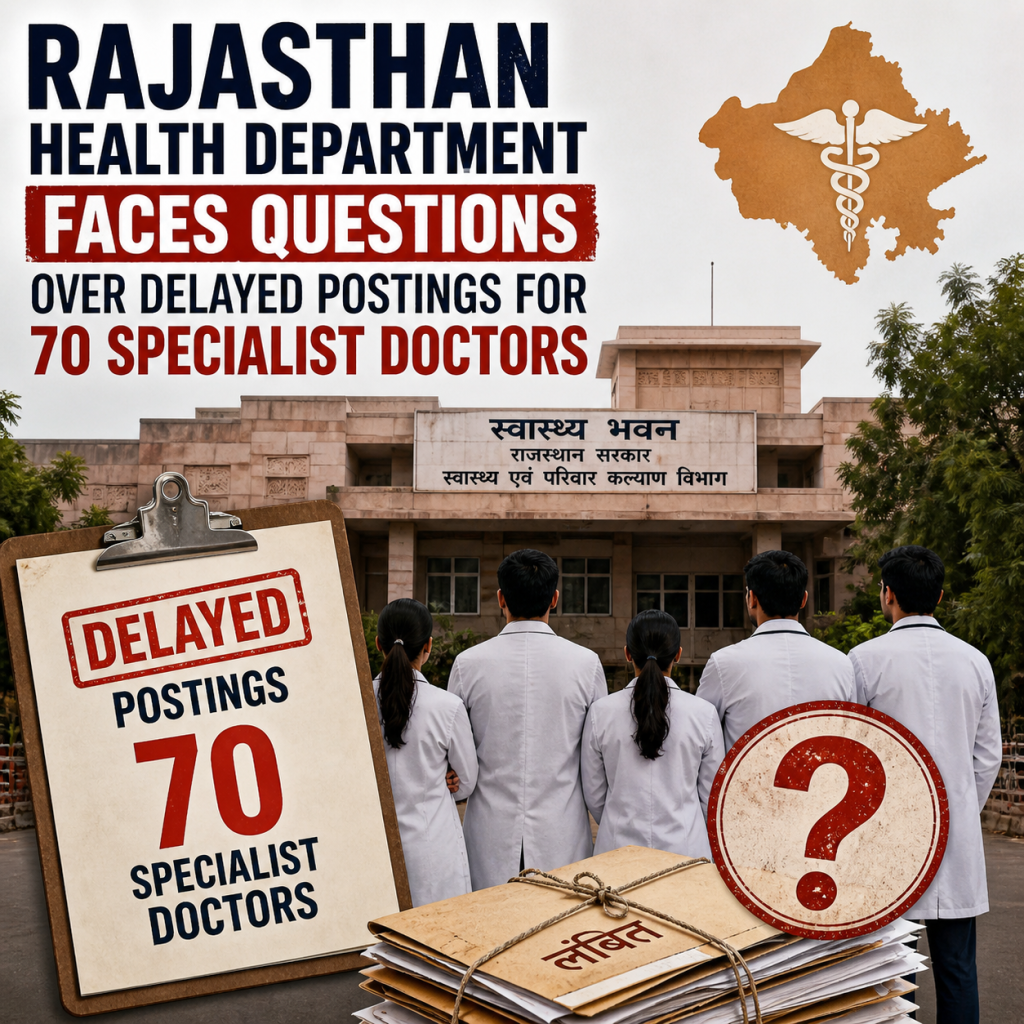
Dr. Ankit Verma finished his three year postgraduate training in General Medicine last October. He expected to receive his official posting as a specialist medical officer within weeks. Instead, he is still working at the same government medical college in Jaipur without a formal appointment letter, without a proper salary structure and without clarity on when his career will actually begin. He is not alone. Around 70 doctors from the 2022 in service postgraduate batch find themselves in exactly the same situation. While 650 of their batchmates received posting orders in January, these 70 specialists were quietly asked to continue at their training institutes. Six months later, many are still there trained, ready and unpaid for their specialist work.
This is not just a paperwork delay. It is a clear example of how administrative gaps can waste years of public investment in medical education and leave both doctors and patients in difficult positions.
What Is the In-Service PG Quota and Why Does It Matter?
Every year, Rajasthan government selects a certain number of doctors who completed their MBBS on government seats. These doctors serve a bond period and are then allowed to pursue postgraduate (PG) training MD or MS degrees while remaining on government payroll. The idea is simple: train them at public expense and then deploy them as specialists in government hospitals where they are most needed.
The 2022 batch joined their PG courses expecting to complete training by late 2025 and move into specialist roles. Most did finish on time. The health department even issued posting orders for the majority in January 2026 but a group of roughly 70 doctors spread across specialties like Medicine, Pediatrics, Obstetrics & Gynecology and Orthopedics were left out.
Instead of receiving their medical officer posting letters, they received informal instructions: “Stay at your current medical college for now.” No official reason was given in writing. No timeline was shared.
Numbers Behind the Delay
- 60–70specialist doctors affected
- Completed PG training: October 2025
- Posting orders issued for peers: January 2026
- Months without formal posting (as of May 2026): 6+
- Doctors reportedly working without proper salary structure: Many in this group
At the same time, state government has announced plans to terminate around 678 doctors who have been absent from duty for several years. The contrast is striking while the administration is quick to remove long absent staff, it has moved slowly to place freshly trained specialists into active service.
Human Side of the Story
Take Dr. Priya Meena from Jodhpur. She specialized in Pediatrics. For the past six months she has been running the pediatric outpatient department at her medical college almost single handedly during peak hours. Patients come to her for expert care. Yet she receives only a basic stipend, not the full specialist grade salary she is entitled to.
“Every day I see children who need proper specialist attention,” she shared. “I want to serve in a district hospital where specialists are scarce but right now I’m stuck doing the same work I did during training without the recognition or pay that should come with it.”
Stories like Dr. Meena’s and Dr. Verma’s are common among the affected group. Many have young families. Some have taken loans for further studies or personal needs, expecting regular specialist salaries by now. Uncertainty has created stress affecting both their professional confidence and personal lives.
Why This Matters for Patients Across Rajasthan
Rajasthan has a well known shortage of specialist doctors in smaller towns and rural areas. When trained specialists remain idle at medical colleges instead of being posted to community health centers or district hospitals, patients lose out. A child in a remote village with a complicated case may have to travel hundreds of kilometers to Jaipur or Jodhpur because no pediatric specialist is available locally. Multiply this across dozens of specialties and the impact becomes clear: longer wait times, higher out of pocket expenses for families and sometimes avoidable complications.
Doctors themselves are ready. They have the qualifications. They have the experience. What is missing is the administrative step that turns “trained specialist” into “posted medical officer.”
Voices from the Medical Community
Leaders from doctors associations have pointed out that this situation reflects a deeper coordination problem between the medical education department and the health services department. One senior office bearer noted that while the government often talks about strengthening healthcare, small but repeated delays like these undermine the entire system.
“These doctors were selected through a transparent process, trained at government expense, and have been working continuously,” he said. “Leaving them without formal postings for months sends the wrong message to thousands of young doctors who are considering government service.”
Health department sources speaking on condition of anonymity, say the delay is linked to “internal verification processes” and “rationalization of vacancies.” They insist the matter is being reviewed. However, no clear deadline has been communicated to the affected doctors.
What Can Be Done Practical Steps
For the doctors currently waiting:
- Keep detailed records of all communications and duties performed since October 2025.
- Stay in touch with the All India MBBS Doctors Association or state medical officers’ groups for collective updates.
- Explore whether any interim honorarium or specialist allowance can be processed while formal postings are finalized.
- Document patient load and clinical work, this strengthens the case that they are already contributing as specialists.
For the health administration:
- Create a single window digital system that tracks every PG trainee from admission to final posting.
- Set a mandatory 30-day timeline between course completion and posting order issuance.
- Hold joint review meetings between medical colleges and the directorate of health services every quarter.
For citizens and policymakers:
- Ask local MLAs and health ministers about the status of these pending postings during public meetings.
- Support faster digitization of government processes so that trained professionals are not left waiting.
Frequently Asked Questions
1. What exactly is an in service PG doctor?
These are government MBBS doctors who are allowed to pursue postgraduate specialization while remaining in government service. After completing PG, they are expected to serve as specialist medical officers in government hospitals.
2. Why were only 70 doctors left without postings?
Official communication has been limited. Health department has said it is part of an ongoing review, but no specific explanation has been shared with the doctors or the public.
3. Are these doctors getting any salary right now?
Most are receiving only a basic training stipend or junior doctor pay, not the full specialist grade salary they would receive after formal posting.
4. How does this affect patients?
Fewer specialists reach district and rural hospitals, leading to longer travel times for patients and increased pressure on already busy medical colleges.
5. Is there any timeline for resolution?
As of May 2026, no official deadline has been announced. Doctors and associations continue to follow up regularly.
Bigger Picture
Rajasthan has made real progress in expanding medical education and increasing the number of postgraduate seats but progress on paper means little if trained doctors remain on the sidelines. Every month of delay is a month when specialist care is not reaching the places that need it most.
Doctors in this group are not asking for special treatment. They are asking for the same treatment given to their 650 batchmates, a clear posting order and the chance to serve the state that trained them.Healthcare is ultimately about people. Behind every policy file are doctors who spent years studying, patients who travel long distances hoping for expert care, and families who rely on a functioning public health system. It is time for the administrative machinery to catch up with the training it has already provided. 70 specialists are ready. The question now is whether the system is ready for them.
If you are a doctor facing similar uncertainty, a patient who has struggled to find specialist care, or simply someone who believes trained professionals deserve timely deployment, this story is worth following. Small administrative fixes today can prevent larger healthcare gaps tomorrow. Sooner these postings are cleared, the sooner Rajasthan’s patients will benefit from the specialists the state has already invested in.
Stay informed, Ask questions and remember behind every delayed file is a doctor waiting to heal.
Disclaimer
This post is for informational and educational purposes only. It does not constitute medical advice, legal opinion or an official investigation. Readers should consult qualified healthcare professionals for personal health concerns. All details are drawn from media reports and outcomes of any official inquiry may provide further clarity.