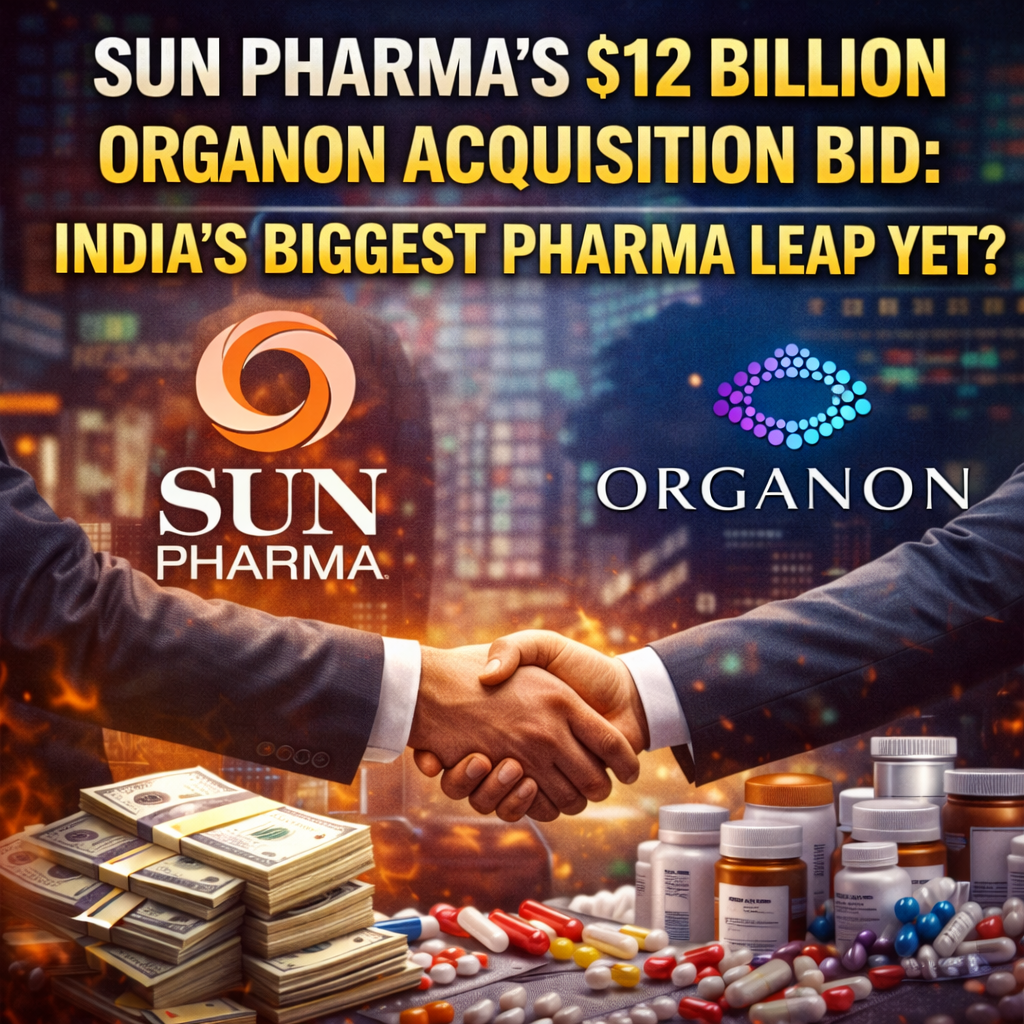
This potential mega deal, first reported on April 10, 2026 has already sent Organon shares soaring and triggered a mild sell off in Sun Pharma stock. If completed, it would mark the largest overseas acquisition ever undertaken by an Indian pharma company and signal a bold strategic shift from generics dominance toward higher margin branded and innovative medicines. Here’s a clear balanced look at what’s happening, why it matters and what could come next.
Who Is Sun Pharma?
Sun Pharmaceutical Industries Limited, headquartered in Mumbai is India’s largest pharmaceutical company by market capitalization. Founded in 1983 by Dilip Shanghvi, company has grown into a global powerhouse with operations in over 100 countries.
Sun is best known for its formidable generics portfolio, active pharmaceutical ingredients (APIs) and a growing specialty drug business. In FY26, the company reported consolidated sales of approximately ₹52,000 crore (roughly $6.2 billion), with nearly equal contributions from the U.S. and Indian markets. It maintains a strong balance sheet with around $3.2 billion in net cash giving it firepower for big ticket deals.
Over the past few years, Sun has actively diversified beyond pure generics into innovative therapies think dermatology, ophthalmology, oncology and products like Ilumya (for plaque psoriasis). This proposed Organon acquisition fits squarely into that long term vision of building a more premium, research driven portfolio.
Who Is Organon & Co.?
Organon was spun off from Merck & Co. (known as MSD outside the U.S.) in June 2021 as a standalone, women’s health focused company. Headquartered in Jersey City, New Jersey, Organon operates in three main segments:
- Women’s Health— Its flagship product is Nexplanon, a long-acting reversible contraceptive implant. The company also offers treatments for endometriosis, polycystic ovary syndrome (PCOS), fertility issues, menopause symptoms and postpartum hemorrhage.
- Biosimilars— A growing pipeline of affordable biologic medicines that generated roughly $660 million in annual sales.
- Established Medicines— A broad portfolio covering cardiovascular, respiratory, bone health, dermatology, and non opioid pain management, contributing the largest chunk of revenue (around $3.69 billion in 2025).
Organon posted approximately $6.2 billion in revenue last year with an adjusted EBITDA margin near 31%. While it carries legacy debt (recently reduced to about $8 billion), its focus on high-need therapeutic areas makes it an attractive asset in a market where women’s health has historically been under served.
Deal Details: Where Things Stand Right Now
According to multiple reports (including The Economic Times and Medical Dialogues), Sun Pharma has already completed more than three months of detailed due diligence. company is now finalizing a financing package with global banksincluding reports of involvement from JPMorgan and MUFG ahead of submitting a formal binding all cash bid in the coming weeks.
Neither Sun Pharma nor Organon has issued an official comment and Sun has previously described early speculation as “speculative.” However, the market reaction and depth of reporting suggest serious momentum.
Why This Deal Makes Strategic Sense
The acquisition aligns perfectly with Sun Pharma’s growth ambitions:
- Diversification into specialty and branded drugs— Generics face intense price pressure. Organon’s higher-margin women’s health and biosimilar products would immediately boost profitability.
- Entry into a booming women’s health market— Global demand for contraception, fertility and hormone therapies is rising due to greater awareness, aging populations and unmet medical needs.
- Biosimilars synergy— Sun can combine its manufacturing scale with Organon’s pipeline to expand faster in complex biologics.
- Stronger U.S. and European presence— Organon’s established footprint would accelerate Sun’s transition from generics exporter to a true global specialty player.
In short, this isn’t just about size it’s about moving up the value chain.
Market Reaction and Investor Sentiment
Markets responded instantly:
- Organon (NYSE: OGN)shares jumped as much as 25%in a single session one of the biggest gains in the company’s history reflecting the attractive premium in the reported $12 billion valuation.
- Sun Pharma shareson the NSE/BSE fell around 3–4%, as investors worried about the debt load required for an all cash deal and potential execution risks.
This mixed reaction is classic for large M&A announcements: excitement about long term growth potential versus short term balance sheet concerns.
Potential Benefits vs. Real Risks
Upside opportunities:
- Significant revenue boost and margin expansion
- Faster innovation pipeline in women’s health
- Enhanced global brand reputation
- Greater patient access through Sun’s efficient manufacturing and distribution network
Key risks to watch:
- Debt and leverage— Financing a $12 billion deal could temporarily strain the balance sheet.
- Regulatory hurdles— Antitrust reviews in the U.S., India and Europe could delay or alter terms.
- Integration challenges— Merging corporate cultures and operations is never easy.
- Valuation— The deal implies a healthy premium and any slowdown in Organon’s key products (like Nexplanon) could affect returns.
What This Means for Indian Pharma as a Whole
If the deal closes, it would be a landmark moment. Indian companies have long excelled in generics and cost efficient manufacturing. Now with stronger balance sheets and global ambitions, leaders like Sun are showing they can compete in the specialty and innovative space too.
Success here could inspire more cross border moves by peers such as Dr. Reddy’s, Zydus or Cipla accelerating India’s rise as a true global pharma innovation hub.
Final Thoughts
Sun Pharma’s reported $12 billion pursuit of Organon is far more than a corporate transaction. It represents a confident bet on the future of healthcare one that prioritizes innovation, women’s healthand long-term global scale. While the deal is still in the binding-bid stage and nothing is finalized, excitement is already building. In the coming weeks, investors, analysts and the entire industry will be watching closely how Sun structures the financing, handles regulatory clearances, and integrates what could become its most transformative acquisition yet.
What do you think?
Could this be the start of a new wave of mega-deals from Indian pharma? Would you invest in Sun Pharma at current levels? Drop your thoughts in the comments below. I’d love to hear your take!
Disclaimer: This post is based on publicly available media reports and is for informational and educational purposes only. It does not constitute financial, investment, or medical advice. Always do your own research or consult a qualified advisor before making any investment decisions.