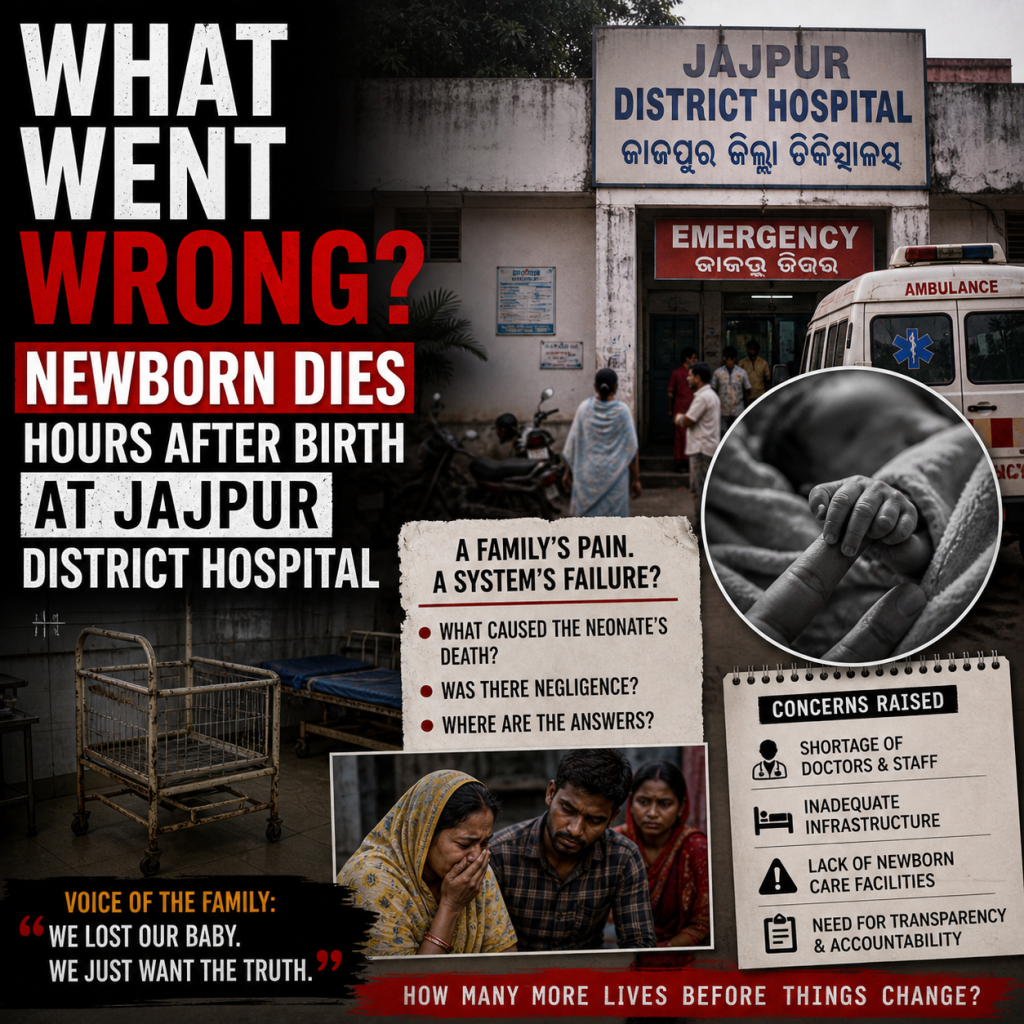
On a quiet Friday in early May 2026, a woman from Kumbharia village in Bhadrak district arrived at Jajpur District Headquarters Hospital in labour pain. By nightfall, she had delivered a healthy looking baby boy within hours, however newborn’s condition deteriorated. He was referred to a higher facility in Cuttack and later shifted to a private nursing home where doctors declared him dead.
Family’s grief quickly turned into anger. On Saturday, they returned to the hospital with the baby’s body and staged a protest outside the Mother and Child Care Centre. They alleged that medical negligence at Jajpur DHH caused their child’s death. The demonstration drew attention from hospital staff, local police and district officials. After several hours of tension, the Chief District Medical Officer assured family that a proper inquiry would be conducted. The protest was eventually called off.
This incident has once again highlighted the fragile trust between patients and public healthcare systems in rural Odisha. Let’s break down exactly what unfolded, why it matters, and what every expecting family should know.
Incident: A Step by Step Account
Mother reached Jajpur DHH on Friday afternoon. She was admitted and monitored. Later that evening, she gave birth to a baby boy. According to family members, child appeared normal at first but soon showed signs of distress. Hospital staff decided to refer the newborn to Shishu Bhawan (specialised children’s hospital) in Cuttack for advanced care.
Baby was shifted but his condition continued to worsen. He was then moved to a private nursing home, where he passed away. Devastated, family brought the body back to Jajpur the next day. They placed it at the Mother and Child Care Centre and demanded answers.
Eyewitnesses described emotional scenes. Relatives, including women from the village, gathered and raised their voices. Some held placards and the wrapped body of the infant. Police personnel were deployed to maintain order. Protest remained peaceful but intense, lasting several hours.
Family’s Allegations and the Protest
Family’s main allegation was simple yet serious: the newborn’s death could have been prevented with better care and timely intervention at Jajpur DHH. They claimed that the initial treatment and monitoring were inadequate. They wanted a thorough investigation and action against those responsible.
Such protests are not uncommon when families feel they have been let down by the system. In many rural areas, people travel long distances for delivery,often placing their entire trust in government hospitals. When tragedy strikes, pain is compounded by the feeling that “someone should have done more.”
Protest at Jajpur was not just about one death. It was also a cry for accountability. Family members said they wanted justice not just for themselves but so that no other parent has to go through the same ordeal.
Hospital Administration Responds
Hospital and district authorities acted quickly once the protest began. Chief District Medical Officer Bijay Kumar Mishra, met the family personally. He listened to their concerns and gave a clear assurance: an official inquiry would be ordered immediately. If any lapse was found appropriate action would be taken.
This response helped calm the situation. Family agreed to withdraw the protest after receiving the written assurance. Police remained present throughout to ensure no untoward incident occurred. Hospital sources later confirmed that the baby had been referred promptly once complications arose. However, family’s perception of delay and inadequate initial care remains the core of their grievance. An inquiry will now examine medical records, staff actions and the referral process.
Why These Cases Matter: Reality of Rural Newborn Care
Every year thousands of babies are born in district hospitals across Odisha. Most deliveries go smoothly but when complications arise especially in the first few hours after birth every minute counts. Neonatal care requires specialised equipment, trained staff and quick decision making.
Jajpur DHH like many district hospitals, handles a large number of deliveries. It serves not only Jajpur but also neighbouring areas. Resources are often stretched. Staff work long shifts. Sometimes, nearest advanced neonatal facility is hours away in Cuttack or Bhubaneswar. This case reminds us how thin the line is between a normal delivery and a medical emergency. It also shows why families feel so helpless when things go wrong they have limited options and even less information.
Practical Advice: What Families Can Do
If you or someone you know is expecting a baby and plans to deliver at a government hospital, here are some practical steps that can help:
- Document everything
Keep a small notebook. Note down the time of admission, names of doctors and nurses on duty, and any advice given. Ask for a copy of the referral slip if the baby is shifted. These records become very important later. - Understand the referral process
Government hospitals follow a clear chain: Primary Health Centre → Community Health Centre → District Hospital → Medical College. If your baby needs higher care, insist on a written referral and ask which facility is best equipped. - Know your rights
Under the Clinical Establishments Act and patient rights guidelines, you have the right to:- Receive respectful care
- Get information in a language you understand
- Seek a second opinion
- File a grievance if you feel care was substandard
- Use official grievance channels
- Call the state health helpline: 104 (Odisha)
- Approach the Chief District Medical Officer’s office
- File a complaint on the state health department portal
- For serious cases, you can approach the District Consumer Disputes Redressal Commission
- Prepare before delivery
Carry your Janani Suraksha Yojana card, Aadhaar, and previous medical reports. If possible, have a family member who can stay alert and ask questions politely but firmly.
Many families have successfully used these steps to get explanations and, in some cases, compensation through proper channels.
Bigger Picture: Building Trust in Public Healthcare
Incidents like the one at Jajpur shake public confidence. Yet they also create pressure for improvement. After every such case, hospitals often review their protocols, staff training and equipment availability.
Odisha has made significant progress in maternal and child health over the last decade. Institutional deliveries have increased. Schemes like Janani Shishu Suraksha Karyakram provide free transport, medicines and diet. Still, gaps remain in specialised neonatal care at the district level.
Key lesson is this: healthcare is a shared responsibility. Hospitals must improve transparency and communication. Families must stay informed and proactive and society must support better funding and staffing for rural hospitals.
Frequently Asked Questions
Q1: Is there an official inquiry into this newborn’s death?
Yes, Chief District Medical Officer has ordered an inquiry, family has been assured that findings will be shared and action taken if negligence is established.
Q2: What should I do if I suspect medical negligence during delivery?
First, stay calm and collect all medical documents. Then approach the hospital administration or CDMO office in writing. You can also call the 104 health helpline for guidance. For serious cases, consult a lawyer specialising in medical negligence.
Q3: Are such protests common in Odisha?
Protests do happen occasionally when families feel unheard. Most are resolved peacefully once authorities engage and promise an inquiry. They highlight the need for better communication between hospitals and patients.
Q4: How can expecting mothers reduce risks during hospital delivery?
Choose a facility with good neonatal backup if possible. Attend all antenatal check ups. Carry emergency contacts. Most importantly, ask questions doctors and nurses are there to help. Early detection of complications saves lives.
Q5: Where can I get more information about patient rights in Odisha?
Visit the official website of the Odisha Health Department or call 104. Many district hospitals also display patient rights charters on their notice boards.
Final Thoughts
The death of a newborn is every parent’s worst nightmare. When it happens inside a hospital, the pain is mixed with anger and a desperate need for answers, family from Kumbharia village did what many would do they demanded accountability.
Their protest has ended but the questions remain. An inquiry is underway whether the outcome brings closure or further action, one thing is clear: every life matters and every family deserves transparent, compassionate care.
If you are reading this as an expecting parent, take this as a reminder to stay informed, ask questions, and keep records. If you are a healthcare worker, remember that clear communication can prevent many misunderstandings. Healthcare systems improve when we treat every case as a lesson. This tragic incident at Jajpur should push all of us families, doctors, administrators and policymakers to work together for safer deliveries and stronger neonatal care across Odisha.
Little boy from Kumbharia will not return but the conversation his death has started can still save many other lives. Let’s make sure it does.
Disclaimer
This post is for informational and educational purposes only. It does not constitute medical advice, legal opinion or an official investigation. Readers should consult qualified healthcare professionals for personal health concerns. All details are drawn from media reports and outcomes of any official inquiry may provide further clarity.