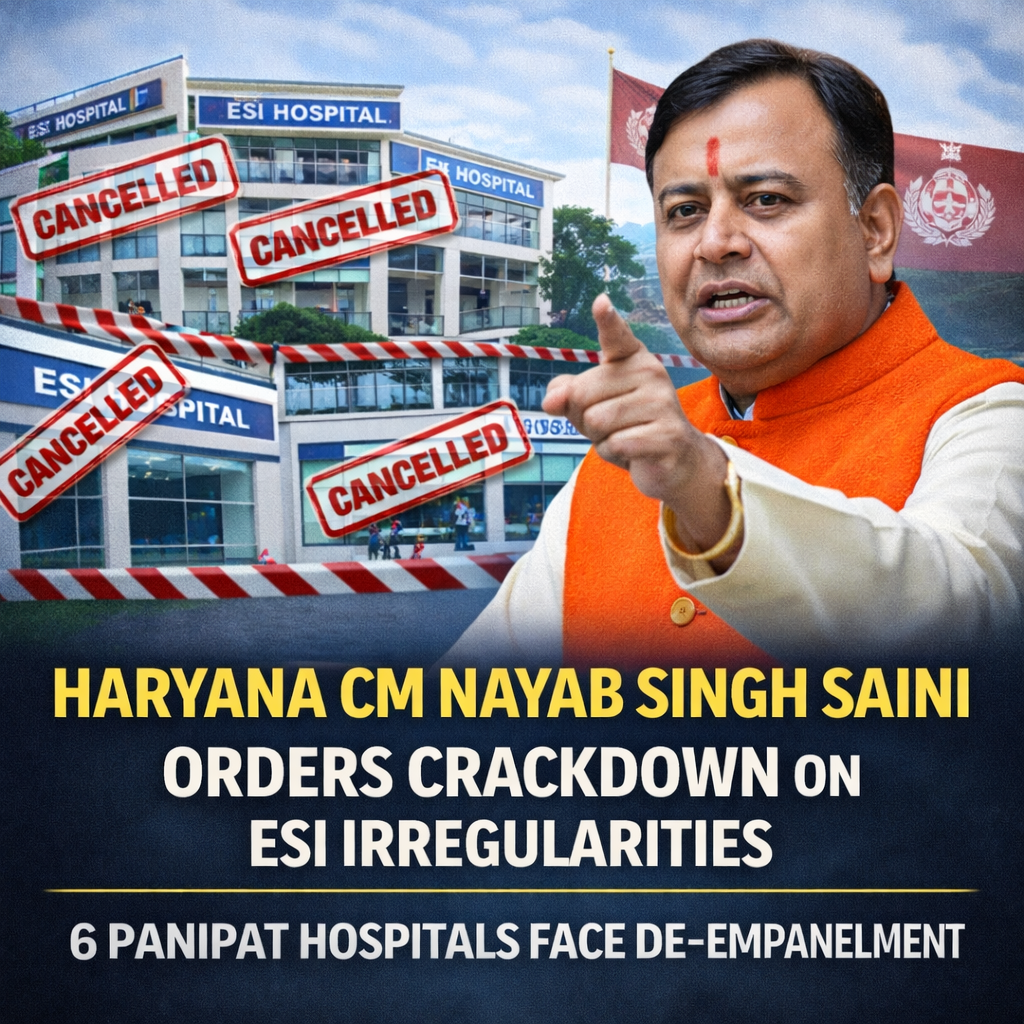
In a clear signal that accountability matters in public healthcare, Haryana Chief Minister Nayab Singh Saini has directed strict action against irregularities in the Employees’ State Insurance (ESI) system. During a recent review meeting, the CM expressed concern over excessive patient referrals and signature discrepancies at the ESI Hospital in Panipat. As a result, the state health department has issued notices to de-empanel six private hospitals in the district. Three ESI hospital employees have also been suspended.
This move isn’t just about one district,it reflects a larger push to make sure insured workers and their families actually get the reliable, quality care they’re entitled to under the ESI scheme. If you’re a factory worker, small industry employee or family member covered by ESI in Haryana, this news directly affects the hospitals you can access and the standards you should expect.
What Is the ESI Scheme and Why Does It Matter in Haryana?
The Employees’ State Insurance Scheme is one of India’s oldest social security programmes, run by the ESI Corporation under the Ministry of Labour and Employment. It covers workers earning up to ₹21,000 per month in factories and certain other establishments. In return for small monthly contributions (shared between employee and employer), it provides cashless medical treatment, sickness benefits, maternity benefits, disability coverage and even funeral expenses.
Haryana with its strong industrial base think Panipat’s textile and refinery clusters, Gurugram’s manufacturing units and Faridabad’s auto sector has a huge number of ESI beneficiaries. State runs several ESI hospitals and dispensaries and it empanels private hospitals to handle overflow cases when government facilities are stretched.
When the system works, it’s a lifeline but when referrals get misused, signatures are fudged or patients are shifted unnecessarily to private facilities, it drains public funds and erodes trust. That’s exactly what prompted the CM’s intervention.
What Exactly Triggered the Crackdown?
According to official statements and multiple news reports, the issues surfaced during a routine review of ESI healthcare services. Between 2020–21 and 2023–24, investigators noticed an unusually high number of referrals from the Panipat ESI Hospital to certain private hospitals. Even more concerning were discrepancies in doctors’ signatures on referral documents.
CM Saini who chaired the meeting at the Haryana Civil Secretariat, made his position clear: “Guilty will not be spared.” He ordered:
- Immediate issuance of de-empanelment notices to the six private hospitals in Panipat.
- Suspension of three staff members at the Panipat ESI Hospital.
- An Anti Corruption Bureau (ACB) probe to get to the root of the problem.
Faster completion of new infrastructure, including two 100 bedded ESI hospitals at Bawal and Bahadurgarh. Health department has already begun the de-empanelment process. Once completed, these six hospitals will no longer be able to treat ESI patients or claim reimbursements from the scheme.
Why De-Empanelment Is a Big Deal
De-empanelment means a hospital is removed from the government’s approved list. For private facilities, it’s a serious financial blow because ESI patients form a steady revenue stream. For patients, it means fewer options in the short term but ideally better regulated care in the long run. This isn’t the first time Haryana has taken steps to clean up healthcare delivery. The state has been expanding ESI bed capacity and tightening monitoring. CM’s directive also ties into broader promises around free treatment at district hospitals and centralised medicine procurement initiatives aimed at reducing out of pocket expenses for ordinary citizens.
Real Life Impact on Workers and Families
Imagine this scenario: Rajesh, power loom worker in Panipat develops severe abdominal pain. Under ESI, he should get treated at the local ESI hospital or a nearby empanelled facility. If referrals were being inflated artificially, he might have been sent to a private hospital unnecessarily perhaps paying extra or facing delays in genuine emergencies.
Stories like this are common in industrial belts. Excessive referrals don’t just waste money; they can delay critical care and overburden genuine cases. By acting swiftly, the government is trying to restore confidence that ESI cards actually mean reliable treatment.
For private hospitals, message is equally clear: play by the rules or lose access to a large patient base. Most empanelled hospitals provide good service but a few bad actors can damage the reputation of the entire system.
What Should ESI Card Holders Do Now?
Here are some practical, actionable tips:
- Know your nearest ESI facility— Download the ESI mobile app or check the official ESI website for updated lists of dispensaries and hospitals. After de-empanelment, approved network will change.
- Insist on proper documentation— Every referral must have clear doctor signatures and justification. If something feels off, ask questions or note the details.
- Report irregularities— The ESI Corporation has grievance redressal mechanisms. You can file complaints through the ESI app, helpline (1800-118-649), or your regional ESI office. Anonymous options exist.
- Understand your rights— ESI covers OPD, IPD, medicines, tests and surgeries at empanelled centres at zero cost to you. No hospital should ask for extra payment for covered services.
- Stay updated— Follow reliable local news or the Haryana Health Department’s social media for announcements about new empanelled hospitals or expanded services.
Government’s Long Term Plan for ESI in Haryana
Beyond the immediate crackdown, CM Saini has directed officials to increase bed strength across ESI hospitals statewide. The focus is on upgrading existing facilities, reducing referral pressure and ensuring medicines are available through a centralised portal (a step the government has already taken in general hospitals).
This approach balances enforcement with expansion punishing wrongdoers while investing in better public infrastructure so fewer patients need private referrals in the first place.
FAQ
1. What does “de-empanelled” actually mean for patients?
It means those six private hospitals in Panipat can no longer treat ESI patients or bill the scheme. You’ll be redirected to other empanelled or government ESI facilities. Government says alternative arrangements will be made so care isn’t disrupted.
2. Will this affect the quality of treatment I receive?
In the short term, you might need to travel a bit farther or wait slightly longer if your usual hospital is removed. Long-term, the goal is higher standards and fewer unnecessary referrals, which should improve overall quality.
3. Can I still choose any hospital with my ESI card?
No,treatment is only free at approved ESI dispensaries, hospitals or empanelled private facilities. Always carry your ESI card and verify the hospital’s status before visiting.
4. How do I know if my hospital is affected?
Check the latest list on the ESI Haryana website or contact your local ESI branch. The six hospitals haven’t been publicly named yet but notices have already been issued.
5. What if I face problems after these changes?
Use the ESI grievance portal or call the national helpline. CM’s office has emphasised zero tolerance your feedback can trigger quick fixes.
Time to Reflect and Act
Haryana’s latest move against ESI irregularities shows that strong political will can drive real change in public systems that affect millions. CM Nayab Singh Saini’s directive backed by suspensions, probes, and infrastructure promises sends a message that corruption and negligence won’t be brushed aside.
For the thousands of industrial workers and their families who rely on ESI every day, this is reassurance that their contributions are being protected but lasting improvement will depend on continued vigilance from the government, hospital administrators and beneficiaries themselves.
If you hold an ESI card, take a minute today to check your nearest approved facility and bookmark the grievance helpline. Small steps like these combined with the state’s enforcement actions, can make the system work better for everyone.
The road to cleaner, more accountable healthcare is never one announcement long but today’s crackdown is a meaningful stride in the right direction.
Disclaimer
This post is for informational and educational purposes only. It does not constitute medical advice, legal opinion or an official investigation. Readers should consult qualified healthcare professionals for personal health concerns. All details are drawn from media reports and outcomes of any official inquiry may provide further clarity.
Link: As reported by The Tribune https://www.tribuneindia.com/news/haryana/haryana-issues-notices-to-de-empanel-6-private-hospitals-in-panipat-over-excessive-referrals/amp