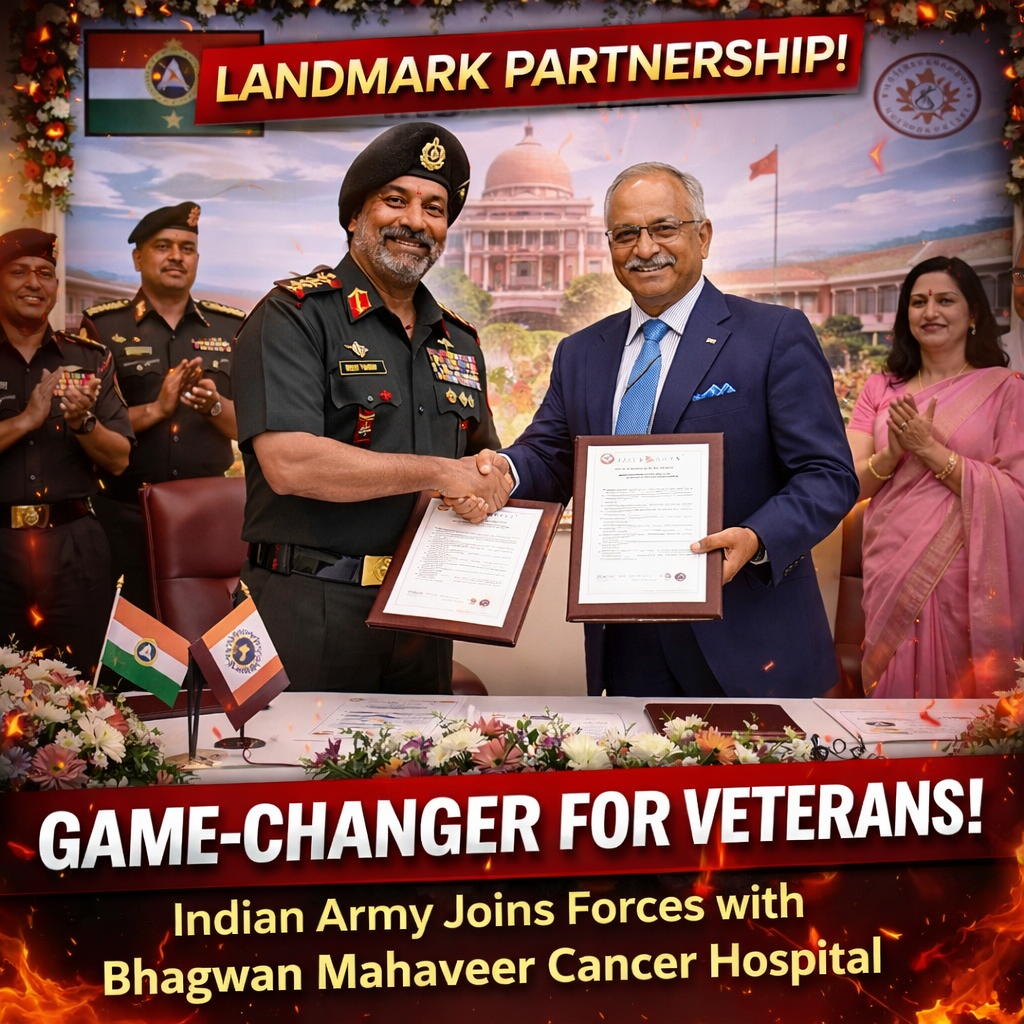
In a significant move reflecting India’s enduring commitment to its armed forces, the Indian Army has signed a Memorandum of Understanding (MoU) with Bhagwan Mahaveer Cancer Hospital & Research Centre (BMCHRC), Jaipur. Announced in mid-March 2026, this partnership is aimed at expanding access to specialized cancer care for veterans, war widows and their dependents.
Why This Matters: Bridging Critical Healthcare Gaps
For many veterans, accessing advanced medical care after years of service can be challenging especially when it comes to complex diseases like cancer. Timely diagnosis and specialized treatment often determine outcomes, making accessibility crucial.
This MoU helps bridge that gap by connecting military welfare systems with a leading civilian oncology institution. Under the agreement:
•Veterans and their families gain enhanced access to specialized cancer treatment
•Services may include cashless or facilitated care pathways
•Focus areas include diagnostics, oncology expertise, and long-term care support
The collaboration ensures that those who served the nation are not left navigating healthcare challenges alone.
A Strong Message from Leadership
The MoU was formalized in Jaipur in the presence of senior leadership, including:
•Manjinder Singh Army Commander of Sapta Shakti Command
•Barinder Jit Kaur, Regional President of the Army Wives Welfare Association (AWWA)
Their presence underscores the importance the armed forces place on post-service welfare and dignity.
Beyond Treatment: Compassion in Action
The initiative goes beyond healthcare access. As part of the collaboration:
•BMCHRC donated essential medical equipment to ASHA School, Jaipur, supporting children with special needs.
This gesture reflects a broader philosophy healthcare is not just about treatment, but about community care and holistic well-being.
A Growing Trend: Public-Private Partnerships in Defense Healthcare
This partnership is part of a larger shift. The Indian Army has increasingly collaborated with private hospitals to complement services provided by systems like:
•ECHS (Ex-Servicemen Contributory Health Scheme)
•Military Command Hospitals
Such partnerships:
•Reduce delays in treatment
•Expand access to cutting-edge medical technologies
•Ease financial burdens on veterans
With rising cancer incidence linked to lifestyle and environmental factors early intervention through trusted networks is more important than ever.
Final Thoughts: A Promise Beyond Service
This MoU represents more than institutional cooperation it symbolizes a promise.
A promise that those who safeguarded the nation will continue to receive care, respect, and support long after their service ends.For veterans in Rajasthan and nearby regions, this initiative opens doors to world class cancer care. For the nation, it serves as a powerful example of how collaboration can create meaningful impact.
Should more such partnerships between the armed forces and private healthcare institutions be encouraged across India?