This landmark order comes as a big relief for state governments and ESIC medical colleges, but it also serves as an important wake-up call for every NEET aspirant and current MBBS student in Karnataka and beyond. If you or your child is preparing for NEET 2026, already studying in a government or ESIC quota seat or planning to take admission this year.
What Exactly Did the Karnataka High Court Rule?
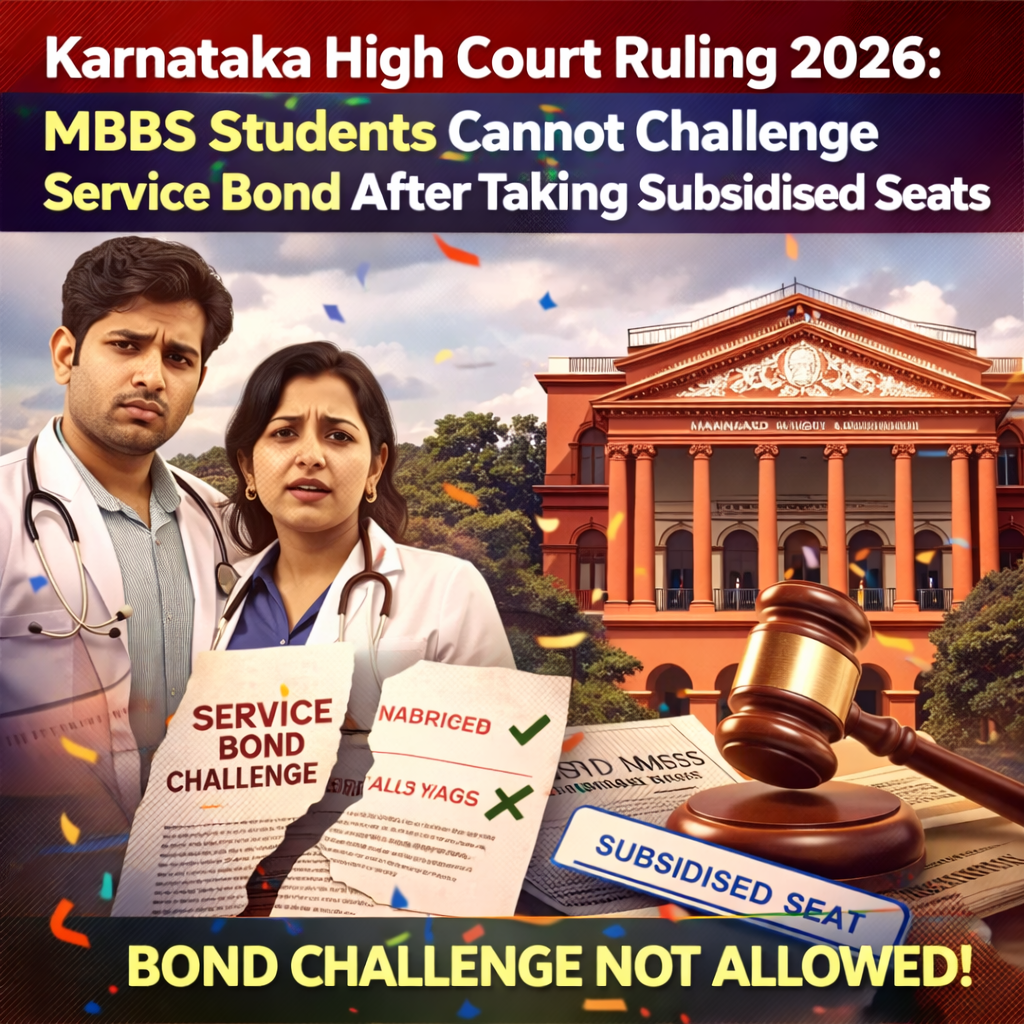
In the case involving ESIC Medical College, Bengaluru, the Division Bench overturned an earlier single judge order and upheld the validity of the service bond.
Key points from the judgment:
- Students who accept subsidised MBBS education by signing a service bond cannot later approach the court to challenge it after completing the course.
- The court clearly stated that this does not amount to “forced labour” or exploitation.
- Students enter the agreement with full knowledge during counselling. They enjoy lower fees and other benefits, so they must honour the commitment.
- The bond in question (originally 5 years service or ₹7.5 lakh penalty) was later relaxed by the authorities to 1 year of service or ₹5 lakh penalty for ESIC colleges.
- The ruling applies to students from the 2012-13 batch onwards who had challenged the bond.
The judges emphasised a simple principle: “You cannot have the cake and eat it too.” You cannot enjoy heavily subsidised education funded by taxpayers and then refuse to serve the public health system.
Why Do States Impose Service Bonds on MBBS Students?
India faces a huge shortage of doctors in rural and government hospitals. To solve this, most states offer MBBS seats at much lower fees (often ₹50,000–₹1 lakh per year vs ₹15–25 lakh in private colleges) but attach a compulsory service bond.
Typical bond conditions in India (2026):
- Serve 1–3 years in government or rural hospitals after internship.
- Pay a penalty (₹5–15 lakh) if you don’t serve.
- Some states allow “buying out” the bond by paying the penalty.
These bonds are not new. Almost every state Karnataka, Tamil Nadu, Maharashtra, Uttar Pradesh, Rajasthan, etc. has similar rules for government quota and ESIC seats. The Karnataka HC ruling now gives legal strength to these agreements nationwide.
Who Does This Judgment Affect?
This verdict directly impacts:
- Students currently studying in government, ESIC, or state-quota MBBS seats in Karnataka.
- Future NEET 2026 aspirants who are targeting subsidised seats.
- Parents who are planning medical education for their children.
- Doctors who completed MBBS/PG under bond but were planning to challenge it in court.
Good news for students: The court has not made the bond harsher. It has only said that once you sign it and complete the course, you cannot go back on your word through litigation.
Practical Advice for NEET Aspirants and Current Students
- Read the bond document carefully during counselling
Every college provides the exact bond format. Understand the service period, penalty amount, and consequences before filling the seat. - Calculate the real cost
A government seat at ₹60,000/year + bond penalty of ₹5 lakh still works out far cheaper than a private seat at ₹20 lakh/year. Do the math before choosing. - Explore bond buy-out options
Many states now allow students to pay the penalty instead of serving. Treat it as an informed financial decision. - Consider rural service positively
Many doctors actually gain excellent clinical experience in government hospitals. It can be a great learning opportunity rather than just a “compulsory” duty. - Plan your career early
If you are absolutely sure you don’t want to serve in government setups, consider only private or deemed universities from the beginning.
How This Ruling Affects Other States
The Karnataka High Court judgment is likely to influence similar cases pending in other High Courts. States like Tamil Nadu, Kerala, Maharashtra and Andhra Pradesh have faced challenges to their service bonds in the past. This clear precedent strengthens the government’s position across India. Medical education experts believe this ruling will reduce unnecessary litigation and help governments retain doctors in underserved areas.
Final Thoughts
The Karnataka High Court’s 9 April 2026 verdict sends a strong message: Subsidised medical education is not a free gift it comes with a social responsibility.
For genuine students who want to serve society, this changes nothing. For those planning to use the low fees and then avoid service, the door to legal challenges is now firmly closed.
Disclaimer: This article is for information purposes only and is not legal advice. Students should consult the latest official notifications from the respective state counselling authorities or colleges.