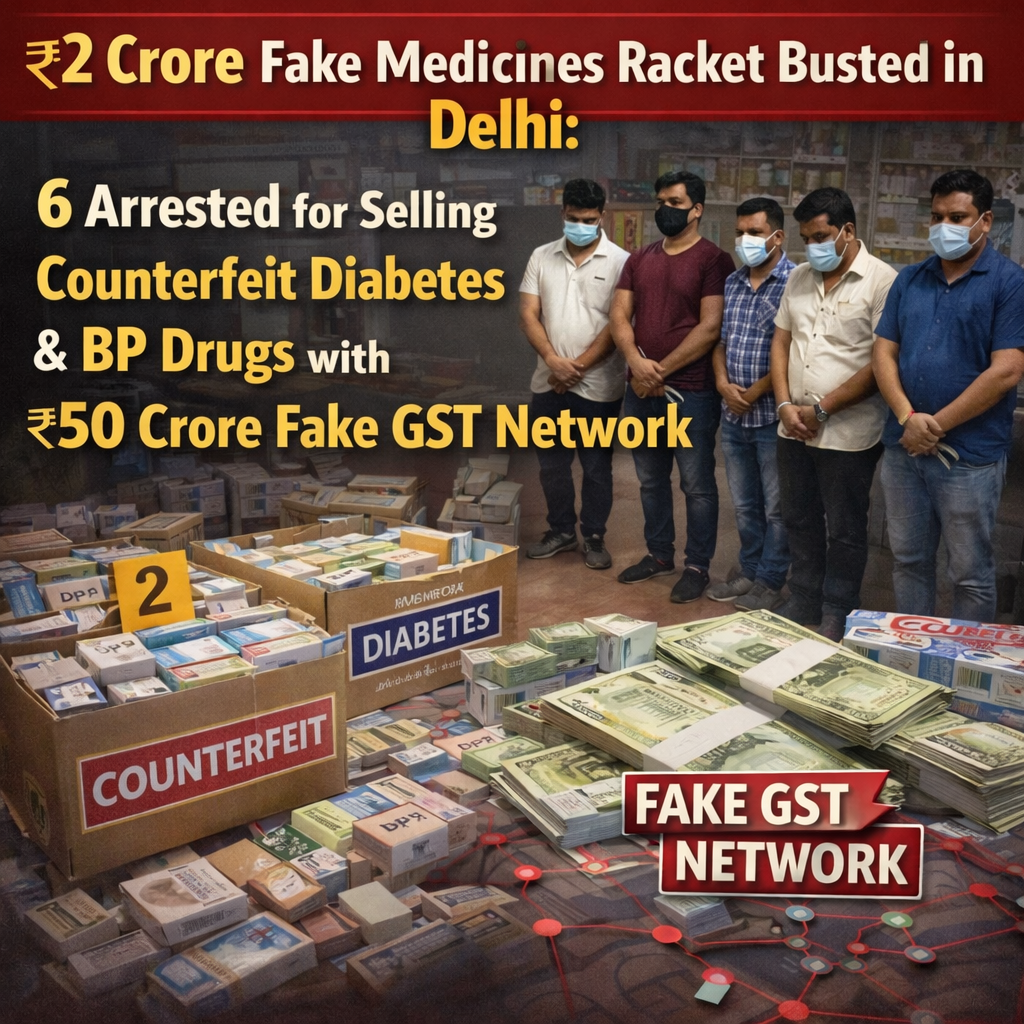
Even more alarming investigators uncovered a parallel fake GST billing network estimated at nearly ₹50 crore, designed to launder illegal proceeds and give the racket a veneer of legitimacy. This case highlights the growing threat of counterfeit pharmaceuticals in India and the clever ways criminals exploit the system. If you or your loved ones take regular medications for diabetes, hypertension or liver conditions
What Happened: The Delhi Police Operation
Acting on specific intelligence, police raided a wholesale medical shop in Bihari Colony, Shahdara (Delhi) on March 11. The raid led to the arrest of Nikhil Arora alias Sunny, a local wholesaler operating from Bhagirathi Palace. Further investigation quickly expanded across state borders resulting in the arrest of five more accused:
- Shivam Tyagi and Mayank Aggarwal (suppliers from Uttar Pradesh)
- Mohit Kumar Sharma (key supplier from Uttarakhand)
- Shahrukh and Rahul (operators of the fake GST firms)
One key figure, Mohammad Aqdas Siddiqui who allegedly ran the illegal manufacturing unit, remains absconding. During the raids, officers recovered over 1.2 lakh counterfeit tablets and capsulesof popular Schedule-H drugs, including fake versions of:
- Telma-AM
- Gluconorm
- Ursocol-300
- Rabemac-DSR
- Sporolac-DS
- Signoflam
- Chymoral Forte
- Jalra-50
These medicines are commonly prescribed for chronic conditions like diabetes, high blood pressure, and liver disorders. Police also busted an illegal pharmaceutical manufacturing unit spanning nearly 1,000 square yards in Muzaffarnagar, Uttar Pradesh. The facility was equipped with advanced machinery including tablet compression machines, coating units, capsule filling machines, blister packaging systems, and even testing equipment.
Additional seizures included around 2,000 kg of raw materials(such as Metformin HCL, calcium carbonate, lactose, starch and magnesium stearate), 10,000 empty bottles with fake labels of reputed pharmaceutical companies, packaging materials, and printing sets.
How the Racket Operated: A Multi State Supply Chain
The accused had built a well-organized operation that spanned manufacturing, storage, distribution and financial cover up. Counterfeit drugs were produced in Uttar Pradesh, stored and supplied from Delhi, and distributed across multiple states using fake invoices.
The gang targeted high demand life saving medicines because they could be sold quickly at lower prices, undercutting legitimate pharmacies while still making huge profits. The entire supply chain operated without valid licenses, and none of the medicines came from authorized distributors.
The ₹50 Crore Fake GST Scam: Hiding in Plain Sight
What makes this case particularly sophisticated is the financial angle. The racket used a network of shell companiesthat existed only on paper. These fake GST firms generated bogus invoices worth nearly ₹50 crore. The invoices served two purposes:
- They created a paper trail that made the illegal trade appear legitimate.
- They allowed the criminals to launder money and potentially claim input tax credits.
Shahrukh and Rahul allegedly ran this GST fraud operation using encrypted communication apps. Police recovered evidence of dozens of shell companies and fake invoices from their mobile phones. This combination of counterfeit drugs and tax fraud shows how modern criminal networks blend traditional illegal activity with white collar financial crimes.
The Real Danger: Why Counterfeit Medicines Threaten Lives
Fake medicines aren’t just ineffective they can be outright dangerous. Counterfeit drugs may contain:
- Wrong dosage (too little or too much active ingredient)
- No active ingredient at all
- Harmful substances or contaminants
- Incorrect formulations
For patients with chronic illnesses, this can lead to treatment failure, disease progression, organ damage or even death. The World Health Organization estimates that up to 10% of medicines in low- and middle income countries may be substandard or falsified and India continues to battle this issue despite strong regulatory efforts.
How to Protect Yourself and Your Family from Fake Medicines
Here are practical, actionable tips every Indian consumer should follow:
- Buy only from licensed pharmacies– Always check for a valid drug license displayed in the shop. Avoid online sellers unless they are verified platforms with proper documentation.
- Verify the packaging– Look for spelling mistakes, poor print quality, faded colors, or missing holograms/security features. Check the batch number, manufacturing date, and expiry on the official company website.
- Use the “Verify Your Medicine” tools– Many pharmaceutical companies now offer SMS or app-based verification. The Central Drugs Standard Control Organization (CDSCO) also provides resources for reporting suspicious medicines.
- Be wary of unusually low prices– If a medicine is significantly cheaper than the market rate, it could be counterfeit.
- Keep prescriptions and invoices– Always retain your doctor’s prescription and pharmacy bill for future reference.
- Report suspicious activity– If you suspect fake medicine, contact your local drug control office or police cyber cell immediately.
Final Thoughts: A Win for Public Safety
The Delhi Police operation is a strong reminder that authorities are actively fighting both counterfeit drugs and the financial networks that support them. Cases like this underscore the importance of vigilance from regulators, law enforcement and consumers alike.
While this bust is a victory, counterfeit medicine rackets continue to evolve. Staying informed and buying medicines responsibly is the best defense for you and your family.
Have you ever received a medicine that looked suspicious?Share your experiences in the comments below (while keeping personal details private). Together, we can raise awareness and keep our communities safer.
FAQs
Q: What are Schedule H drugs?
A: These are prescription only medicines that require a doctor’s prescription. They include many life saving drugs for chronic conditions.
Q: Is it safe to buy medicines online?
A: Only from verified, licensed platforms. Always cross check the seller’s credentials.
Q: What should I do if I suspect I’ve taken fake medicine?
A: Contact your doctor immediately and report the medicine to the pharmacy and drug authorities.