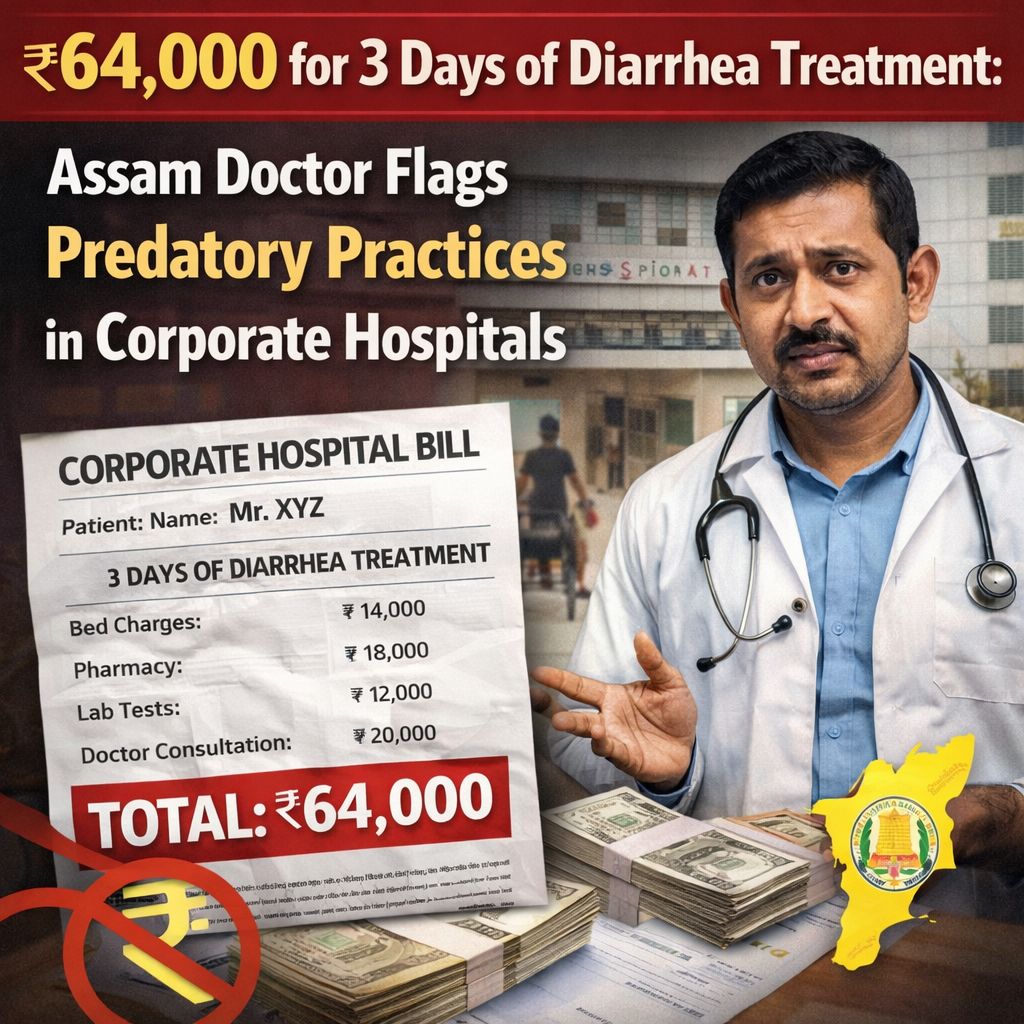
His message quickly went viral after he shared a shocking personal example: his cousin’s simple three day treatment for diarrhea resulted in a staggering ₹64,000 bill at a private hospital.
This is not just one isolated complaint. It has ignited a nationwide conversation about transparency, affordability and patient rights in India’s growing private healthcare sector. If you or your family rely on private hospitals for quality care or if you worry about the next medical bill
The Story That Sparked the Debate
Dr. Bordoloi responded to growing public frustration over high hospital bills by recounting his cousin’s experience from two years ago. As someone who preferred private care for comfort, she was admitted for diarrhea treatment. What should have been routine care quickly turned into a major financial burden. The bill included inflated prices for medicines, unnecessary diagnostic tests such as vitamin panels and a CT abdomen scan that may not have been clinically justified and overuse of antibiotics without clear explanation. Dr. Bordoloi himself a medicine doctor, pointed out these issues and openly criticized the lack of transparency. He did not hesitate to call certain corporate hospital chains a “financial sinkhole” for patients and their families. His comments gained rapid attention and were covered by major news outlets including NDTV and Hindustan Times. While many private hospitals deliver excellent infrastructure and advanced treatments, concerns about profit driven practices that increase costs for ordinary families continue to grow.
Why Predatory Billing Occurs in Private Healthcare
India’s private healthcare market is expanding rapidly and is now valued at over $100 billion. Corporate hospital chains have invested in modern technology, comfortable rooms and imported equipment which often leads to better clinical outcomes. However, these improvements come with higher costs that many patients find difficult to bear.
Hospitals sometimes apply significant markups on medicines and consumables. Package deals can encourage multiple tests and consultations that feel more like upselling than strictly necessary medical care. In addition, the lack of clear itemized billing makes it challenging for patients to understand or question individual charges.
Similar complaints have surfaced in cities across India. A routine procedure or short ICU stay can easily push the total bill into lakhs, forcing families to dip into savings, delay important expenses, or even take loans. Public hospitals remain an option for subsidized care, but overcrowding and longer waiting times often push people toward the private sector despite the higher costs.
The Real Impact on Families
Unexpectedly high hospital bills create severe financial stress during already difficult times. Families may need to use retirement funds, postpone children’s education, or borrow money at high interest rates. This added pressure can slow down a patient’s recovery and discourage people from seeking timely medical help in the future.
The emotional toll of illness becomes even heavier when combined with anxiety over mounting bills. Many middle class households, with monthly incomes between ₹30,000 and ₹50,000, find that a single hospitalization can disrupt their financial stability for years.
Practical Steps to Protect Yourself from Overbilling
You do not have to feel helpless when dealing with hospital bills. Taking a few proactive steps can make a significant difference in controlling costs and ensuring fair treatment. Before admission, always ask for a detailed written estimate that breaks down expected charges for the room, medicines, tests and procedures. At the time of discharge, insist on receiving a complete itemized bill and carefully review every line. Do not hesitate to question charges that seem unclear or excessive, such as brand name drugs when generics would work equally well.
Research hospitals in advance by checking NABH accreditation, patient reviews on platforms like Google or Practo, and feedback from others. If you have health insurance, choose a policy with good cashless facilities and understand the terms related to room rent and exclusions. Inform the hospital’s insurance desk early and keep all policy documents handy.
For non emergency cases, consider day care procedures, government schemes such as Ayushman Bharat (PM-JAY) or trusted charitable hospitals. Teleconsultations can also help reduce unnecessary hospital visits. During treatment, stay involved by asking doctors why each test is required and how it will affect the care plan. Keeping notes of every medicine, test and consultation gives you better control during billing discussions.
What Needs to Change for Better Healthcare
Dr. Bordoloi’s message serves as an important reminder that doctors should act as advocates for patients first. While hospitals cite high operational costs such as staff salaries and equipment maintenance, patients deserve clear pricing and honest communication.
Many experts and patient groups are calling for mandatory price transparency, digital billing systems that show charges in real time, and stronger enforcement of ethical guidelines. Some states have already started implementing patient charters and audits. As individuals, we can support positive change by choosing transparent providers and sharing experiences responsibly.
Final Thoughts
Private hospitals have brought many improvements to healthcare in India, including faster service and advanced facilities. However, when costs become unpredictable and feel excessive, trust breaks down. Dr. Priyam Bordoloi’s courage in speaking out highlights the need for balance between quality care and affordability.
If this article helped you understand the issue better, feel free to share it with friends and family. Have you or someone you know faced unexpected hospital bills? Share your thoughts in the comments below. Let’s keep the conversation respectful and focused on solutions. Stay informed and take charge of your health decisions. Knowledge remains one of the best tools when navigating India’s complex healthcare system.
Disclaimer: This article is for informational and awareness purposes only. It is based on publicly available reports and general guidance. It does not constitute medical, financial, or legal advice. Always consult qualified doctors and professionals for your specific situation.