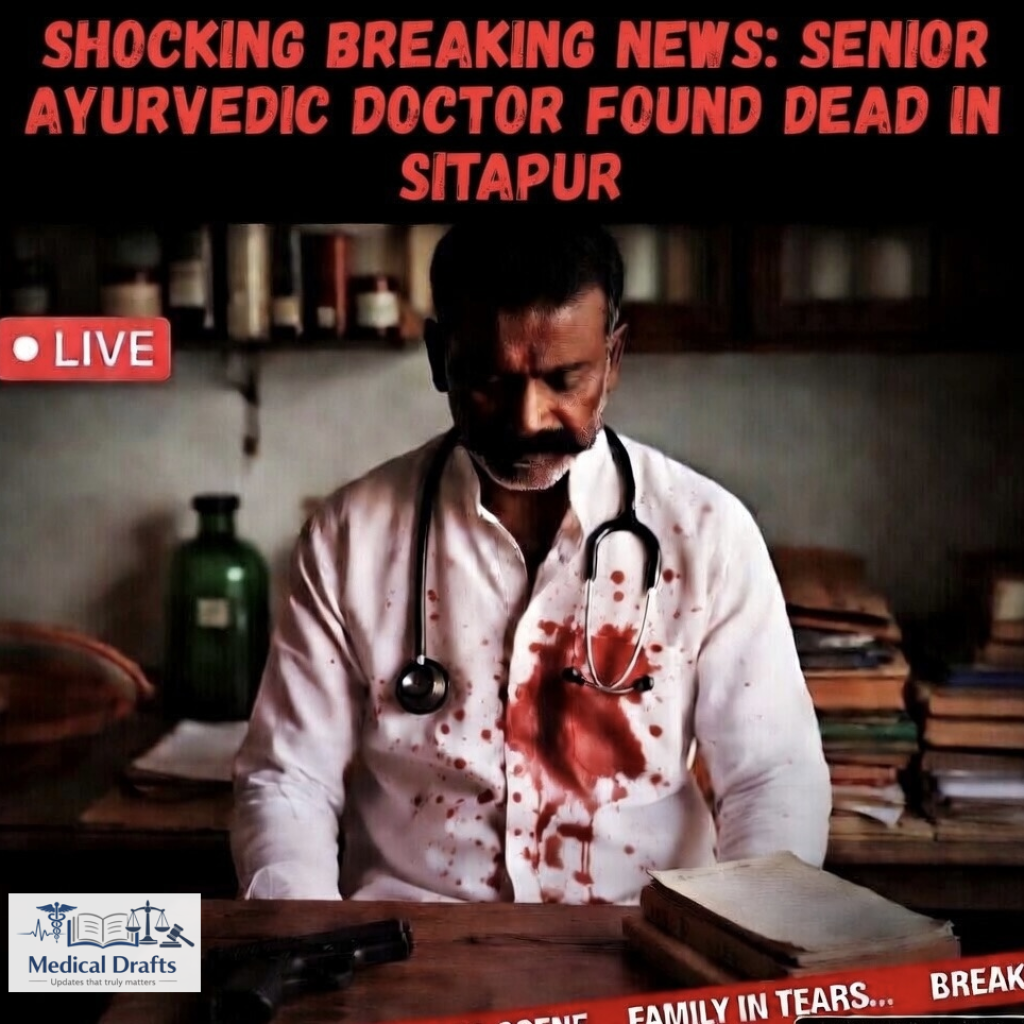
In a deeply saddening development that has left the medical community in Uttar Pradesh stunned, a 69 year old BAMS doctor from Sitapur tragically lost his life to suicide on March 27, 2026. The senior practitioner, who ran a clinic in Khairabad and was known locally as a dedicated doctor and good person. He had lunch around 1 PM on March 27, 2026. He then went to his room on the first floor of the house after that gunshot was heard shortly afterward.
His wife who was downstairs at the time, rushed to the room upon hearing the sound and found him in a pool of blood. The doctor was declared dead at the spot. Police reached the spot along with a forensic team. licensed revolver used in the incident has been seized. Officers said no suicide note was immediately found and a detailed investigation is underway to determine the exact circumstances and no foul play has been suspected, this incident serves as a stark wake up call. It is not an isolated tragedy but part of a growing silent crisis affecting healthcare professionals across India. Doctors often viewed as pillars of strength and healers are increasingly battling burnout, anxiety, depression and overwhelming stress.
The Alarming Statistics: Doctors and Suicide in India
India already reports one of the highest suicide rates globally, with over 170,000 cases annually as per recent National Crime Records Bureau (NCRB) data but the numbers within the medical community are particularly concerning:
- Studies spanning 2010–2019 documented 358 suicidesamong medical students, residents and practicing physicians.
- Between 2020 and 2022 alone, at least 118 such deathswere reported in media and official channels.
- In 2025, 25 resident doctorsdied by suicide, amid reports of burnout rates hovering around 42% and depression affecting 30% of young medics.
- Female doctors and residents often face heightened risks, with younger professionals (under 40) making up a large share of cases.
These figures come from peer reviewed analyses and news compilations yet the real number may be higher due to underreporting and stigma. Burnout long duty hours (often 80–100 hours a week despite regulations), academic pressure and emotional exhaustion are frequently cited triggers.
Why Are Doctors Struggling? Common Causes
Doctors in India face a perfect storm of stressors that go far beyond what most professions endure:
- Grueling Work Schedules: Resident doctors and even senior practitioners routinely work extended shifts with minimal rest. Sleep deprivation, skipped meals, and constant on-call demands take a heavy toll on physical and mental health.
- High Patient Load and Resource Shortages: Overcrowded hospitals, limited staff, and emotional encounters with suffering patients lead to compassion fatigue. Many doctors report feeling powerless when systems fail them.
- Academic and Professional Pressure: For students and residents, intense competition for seats, exams, and specialization creates relentless anxiety. Practicing doctors deal with violence from patients’ families, legal threats, and administrative burdens.
- Work Life Imbalance and Stigma: Balancing family responsibilities is tough especially for female doctors, who often shoulder disproportionate domestic loads. Seeking mental health help is still taboo in many medical circles, with fears of being labeled “weak” or facing career repercussions.
- Broader Societal Factors: Financial worries, marital issues and the lingering impact of events like the COVID-19 pandemic (which amplified workload and trauma) have worsened the situation.
A 2025 scoping review of over 120 studies found that more than half of surveyed Indian doctors experience significant depression and anxiety, linked directly to these systemic issues. Emotional intelligence training and better work environments could help but change has been slow.