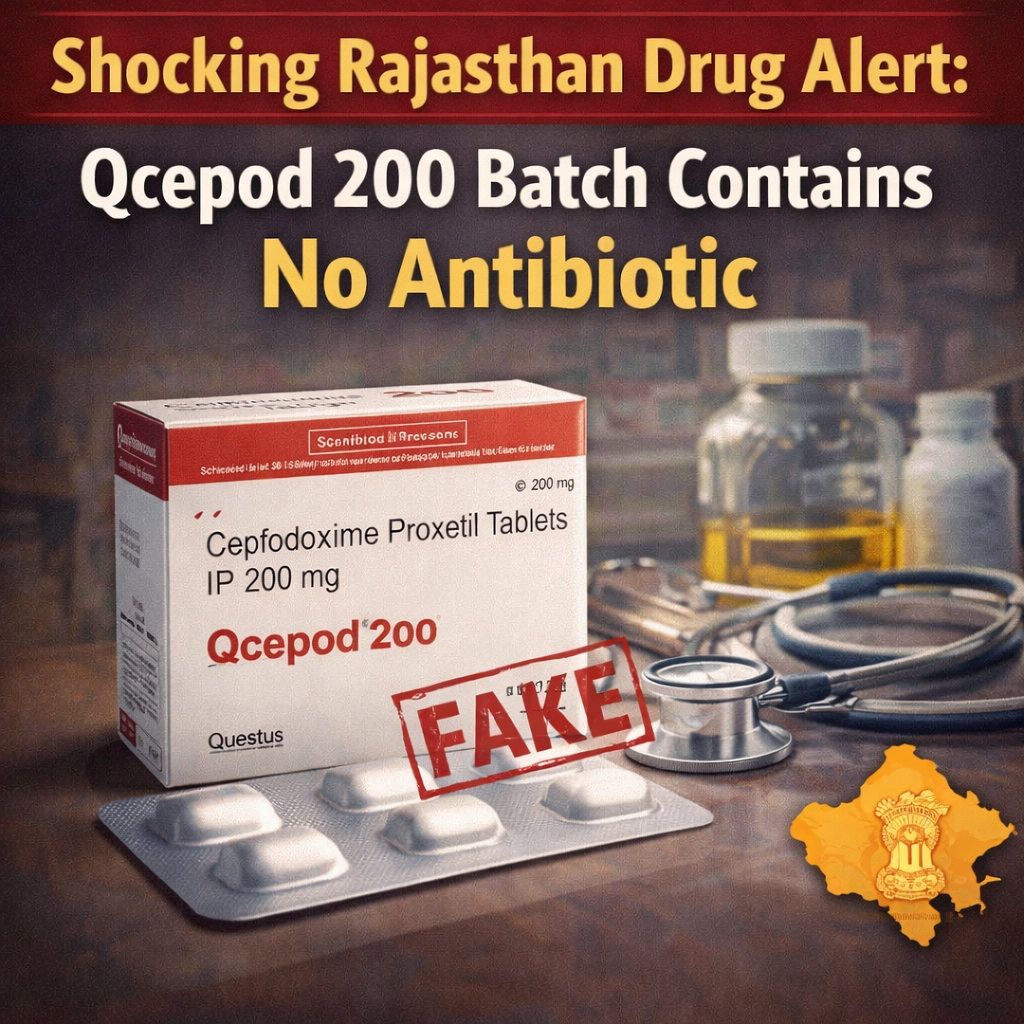
This isn’t just a minor quality issue, it’s a complete failure of the medicine to do what it’s supposed to. For patients relying on it to fight serious bacterial infections, the consequences could be severe. Here’s everything you need to know about this case, why it matters and most importantly practical steps you can take to avoid falling victim to spurious or substandard medicines.
What Happened in Rajasthan?
According to official reports, drug inspectors in Rajasthan collected samples of Qcepod 200 during routine checks. The batch in question VT 242312was manufactured by VADSP Pharmaceutical in Baddi, Himachal Pradesh and supplied to a Jaipur based distributor.
Lab results were alarming: the tablets had zero traces of the key antibiotic component (Cefpodoxime). Authorities immediately declared the batch spurious and issued a statewide alert. Stocks worth several lakhs of rupees have already been seized from pharmacies and distributors. The state health department has directed all drug control officers to withdraw the medicine from circulation immediately. Similar incidents have been reported in the past, but this case stands out because the medicine was completely devoid of its therapeutic component essentially turning it into an expensive placebo.
Why Qcepod 200 Matters
Qcepod 200 is a third generation cephalosporin antibiotic commonly prescribed for:
- Respiratory tract infections
- Urinary tract infections
- Skin and soft tissue infections
- Certain cases of pneumonia and meningitis
Doctors rely on it because it’s effective against a wide range of bacteria. When patients take a fake version with no active medicine, the infection doesn’t get treated. This can lead to worsening symptoms, complications, longer hospital stays, and in serious cases life threatening outcomes. Worse still, incomplete or ineffective antibiotic treatment contributes to the growing global crisis of antibiotic resistance. Bacteria become harder to treat in the future, putting everyone at risk.
The Bigger Picture: Spurious Drugs in India
Unfortunately, this is not an isolated incident. India’s Central Drugs Standard Control Organisation (CDSCO) regularly flags hundreds of drug batches as “Not of Standard Quality” (NSQ) or spurious every year. While most Indian pharmaceutical companies maintain high standards, a small but dangerous segment of the market continues to produce or distribute counterfeit and substandard medicines.
Factors contributing to the problem include:
- Weak supply chain monitoring in some regions
- Unscrupulous manufacturers cutting corners
- Online pharmacies selling unverified products
- High demand for affordable medicines
The good news? Government authorities, state drug controllers, and industry bodies are becoming more vigilant. Regular raids, improved testing labs, and digital tracking systems are helping curb the menace.
How to Identify Genuine Medicines
You don’t need to be a pharmacist to protect yourself. Here are simple, actionable steps every consumer can follow:
- Check the Batch Number and Expiry Date
Always cross check the batch number (like VT 242312 in this case) against any government alerts. Many state drug control websites and the CDSCO portal publish regular lists. - Look for the QR Code or Hologram
Most legitimate Indian medicines now carry a unique QR code or security hologram. Scan it with your phone to verify authenticity through official apps or manufacturer websites. - Examine Packaging Closely
Genuine packs have crisp printing, proper spelling, and consistent fonts. Blurry labels, poor quality printing or missing manufacturer details are red flags. - Buy Only from Trusted Sources
Prefer licensed pharmacies over unverified online sellers. If buying online, choose platforms that display proper licensing information and offer easy returns. - Use Official Verification Tools
The government’s “Track and Trace” system and various state drug portals allow you to verify medicines. Bookmark them for quick reference. - Consult Your Doctor or Pharmacist
If in doubt, show the medicine strip to a healthcare professional before consuming it.
What Should You Do If You Have Qcepod 200 Batch VT 242312?
- Stop using it immediately.
- Return the remaining tablets to the pharmacy where you bought them.
- Report it to your local drug control authority or the Rajasthan Drug Control Department.
- If you’ve already taken the medicine and feel unwell, consult your doctor right away and inform them about the batch details.
Pharmacies are legally required to take back spurious stock and issue refunds or replacements.
Final Thoughts: Stay Informed, Stay Safe
This Rajasthan alert on Qcepod 200 is a wake up call. While India’s pharmaceutical industry is one of the largest in the world and supplies quality medicines globally, incidents like this remind us that vigilance is still essential at the consumer level.
By staying informed and following simple verification steps, you can significantly reduce your risk. Share this article with your family and friends awareness is the first and most powerful line of defense against counterfeit medicines.
Important Disclaimer:This post is for informational and educational purposes only. It is not medical advice. Always consult a qualified healthcare professional for treatment decisions.
Have you ever come across suspicious-
looking medicine packaging? What checks do you follow before buying medicines? Drop your thoughts in the comments below let’s help each other stay safe.